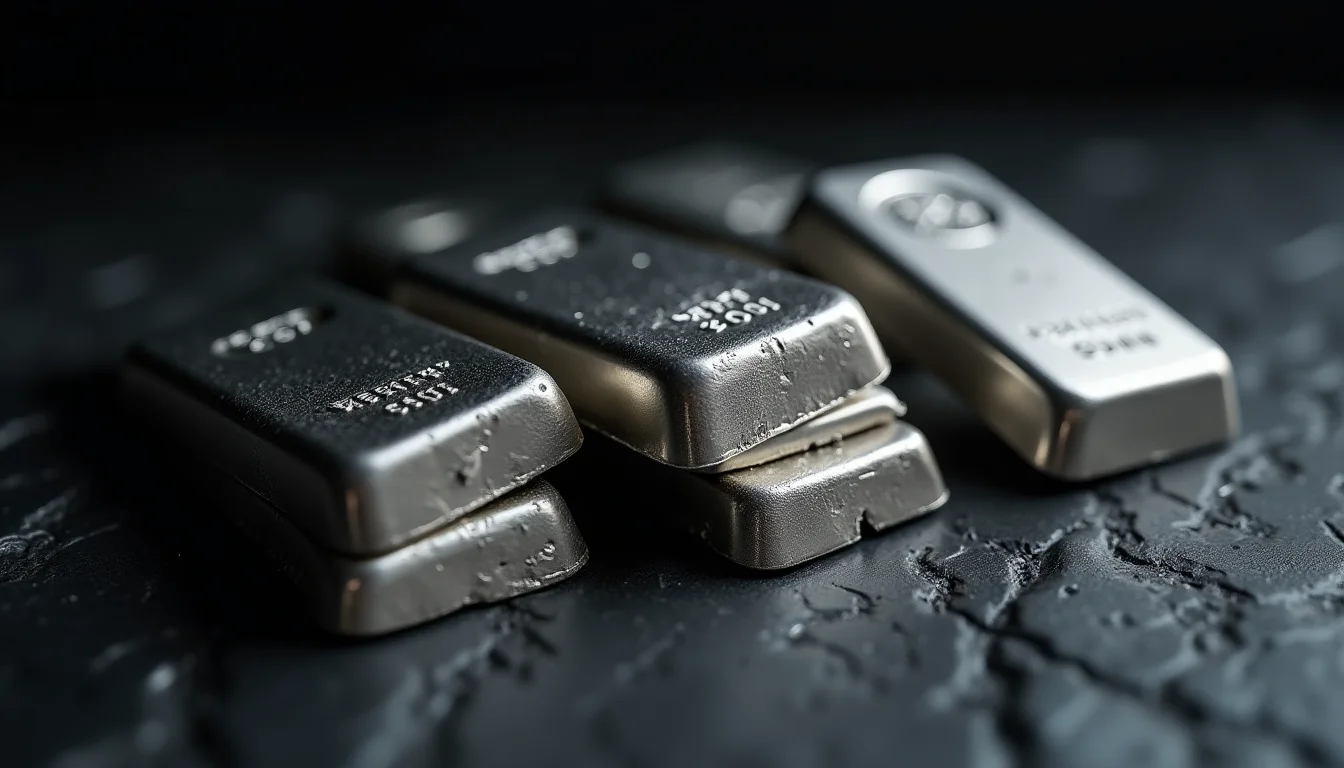
Silver Investing
Silver investing involves buying physical silver, ETFs, or mining stocks as a hedge against inflation and portfolio diversification strategy for long-term
Key Takeaways
- →Silver offers portfolio diversification and inflation hedging through physical bullion, ETFs like ETPMAG, or mining stocks like NST
- →Physical silver incurs storage costs and CGT on gains, while silver ETFs provide easier liquidity without storage concerns
- →Silver prices are more volatile than gold, often moving 2-3 times more dramatically during market fluctuations
- →Consider allocating 5-10% of investment portfolio to precious metals including silver for effective risk management diversification
- →Australian silver purchases over $5,000 require dealer reporting, affecting privacy compared to smaller incremental accumulation strategies
Industrial Demand Share
~50-55% of total consumption
Solar Panel Silver Content
~20 grams per panel
Gold-to-Silver Ratio Average
60-70 historically
Annual Mine Production
~25,000-26,000 tonnes
More Volatile Than Gold
~1.5-2x gold's volatility
Byproduct Mining Share
~70% of supply
What is Silver Investing?
Silver investing represents participation in one of the world's oldest asset classes, offering exposure to a precious metal that serves dual roles as both an industrial commodity and a store of value. Unlike gold, which is primarily held for monetary purposes, silver derives significant demand from industrial applications including electronics, solar panels, medical devices, and automotive components. This industrial demand accounts for approximately 50-60% of global silver consumption, creating unique supply-demand dynamics that distinguish silver from other precious metals.
Investors can access silver through multiple investment vehicles including physical bullion, exchange-traded funds (ETFs), mining company shares, and futures contracts. The Perth Mint, a world-renowned precious metals refinery, provides Investors with local access to certified silver products, while the Australian Securities Exchange (ASX) lists several silver-focused mining companies and ETFs. Silver's price volatility typically exceeds that of gold, offering both greater profit potential and increased risk exposure.
The silver market operates globally, with major trading centres in London, New York, and Shanghai. Industrial silver demand continues expanding alongside technological advancement, particularly in renewable energy sectors where silver's superior electrical conductivity makes it irreplaceable in photovoltaic cells and electrical components.
How Does Silver Investing Work?
Silver investing operates through several distinct mechanisms, each offering different risk-return profiles and practical considerations. Physical silver investment involves purchasing bullion coins, bars, or rounds, which provides direct ownership but requires secure storage and insurance. Investors commonly purchase Silver Kangaroos from the Perth Mint or internationally recognised products like American Silver Eagles or Canadian Silver Maples. Storage options include bank safety deposit boxes, precious metals depositories, or home safes, each carrying associated costs and security considerations.
Exchange-traded funds (ETFs) represent a popular alternative, offering silver exposure without physical storage requirements. The ETFS Physical Silver ETF (ASX: ETPMAG) provides Investors with exposure to silver prices through units backed by physical silver held in secure vaults. This structure eliminates storage costs while maintaining liquidity through stock exchange trading.
Silver mining company investments offer leveraged exposure to silver prices, as mining operations typically experience amplified profit changes relative to underlying metal price movements. Major silver producers include First Majestic Silver, Pan American Silver, and Australian companies like Silver Lake Resources (ASX: SLR). These investments carry additional risks including operational challenges, geological uncertainties, and management execution risks.
Futures contracts and options provide sophisticated investors with leveraged silver exposure and hedging capabilities. The Chicago Mercantile Exchange (CME) silver futures contract represents 5,000 troy ounces, while COMEX mini silver futures offer smaller 1,000-ounce contracts suitable for retail investors. These derivatives require margin accounts and sophisticated risk management due to their leveraged nature.
Historical Context
Silver's monetary history spans millennia, serving as currency in ancient civilisations and maintaining official monetary roles well into the 20th century. The United States maintained silver backing for currency until 1965, when rising silver prices made coin production uneconomical. This demonetisation created the modern silver investment market, where industrial demand increasingly drives price dynamics alongside investment demand.
The Hunt Brothers' attempt to corner the silver market in the late 1970s exemplifies silver's volatility potential. Herbert and Nelson Hunt accumulated massive silver positions, driving prices from $6 per ounce in early 1979 to a peak of $49.45 in January 1980. The subsequent crash to $10 within months demonstrated both silver's speculative appeal and inherent instability. This episode led to enhanced market regulations and position limits that continue today.
Australia's silver production history includes significant discoveries at Broken Hill in 1883, establishing the nation as a major global silver producer. The Broken Hill Proprietary Company (BHP) originated from silver-lead-zinc mining operations, later evolving into one of the world's largest diversified miners. Contemporary Australian silver production primarily comes as a byproduct from base metals operations, making domestic supply sensitive to copper, lead, and zinc demand cycles.
The 2008 financial crisis sparked renewed interest in precious metals investing, with silver experiencing dramatic price volatility. Silver prices surged from $9 in 2008 to nearly $50 in 2011, driven by quantitative easing concerns and industrial demand recovery. The subsequent decline to $14 by 2015 highlighted silver's sensitivity to both monetary policy changes and industrial demand fluctuations.
Current Relevance for Investors
Investors face unique considerations when investing in silver, particularly regarding taxation and currency exposure. The Australian Taxation Office (ATO) treats physical silver as a collectible asset, subject to capital gains tax on profits from sales. However, silver held for more than 12 months qualifies for the 50% capital gains tax discount, making longer-term holdings more tax-efficient. Silver ETFs and mining company shares receive standard capital gains tax treatment, potentially offering more favourable taxation for active traders.
Currency dynamics significantly impact Australian silver investors, as silver prices are typically denominated in US dollars. A strengthening Australian dollar reduces the local currency returns from silver investments, while a weakening AUD amplifies gains. This currency exposure can provide portfolio diversification benefits during periods of Australian dollar weakness but may reduce returns when the local currency strengthens.
The Perth Mint's position as a globally recognised precious metals refinery provides Investors with access to high-quality silver products and storage services. The Perth Mint Depository programme offers allocated and unallocated silver storage options, providing professional custody services for serious precious metals investors. This local expertise reduces counterparty risks associated with offshore storage arrangements.
"Silver's industrial demand profile creates a unique investment proposition where technological advancement and monetary concerns intersect, offering Investors exposure to both commodity cycles and monetary policy impacts through a single asset class."
Recent developments in renewable energy technologies enhance silver's long-term demand prospects. Solar panel manufacturing requires approximately 20 grams of silver per panel, with global solar installations continuing rapid expansion. Electric vehicle adoption also supports silver demand through increased electrical component requirements, creating structural demand growth independent of monetary considerations.
Warning Signs & Common Mistakes
Australian silver investors frequently underestimate storage and insurance costs associated with physical holdings. Professional storage facilities typically charge 0.5-1.5% annually of stored value, while appropriate insurance coverage adds additional costs. Home storage appears attractive but carries significant security risks and potential insurance coverage gaps. Investors should calculate total holding costs before committing to physical silver positions.
Emotional decision-making represents another significant risk factor, as silver's price volatility can trigger impulsive trading decisions. The metal's tendency to experience rapid price swings creates strong psychological pressures, leading investors to buy during price peaks and sell during troughs. Successful silver investing requires disciplined approach and predetermined entry/exit strategies rather than reactive trading based on short-term price movements.
Concentration risk poses substantial dangers when silver holdings represent excessive portfolio percentages. While silver can provide portfolio diversification, allocations exceeding 5-10% of total investment assets may create unbalanced risk exposure. Silver's industrial demand correlation with economic cycles means concentrated positions can underperform during extended economic downturns.
Leverage-related mistakes commonly affect investors using futures contracts or margin accounts. Silver's volatility can quickly erode leveraged positions through margin calls, forcing unwanted liquidation at unfavourable prices. Beginning silver investors should avoid leveraged products until gaining substantial experience with underlying metal price dynamics and risk management techniques.
Counterfeit silver products represent growing concerns, particularly for physical silver investors purchasing from non-established dealers. Professional testing equipment and dealer reputation verification provide essential protection against fraudulent products. The Perth Mint's authentication programmes and established dealer networks offer reliable purchasing channels for Investors.
Key Takeaways
Silver investing offers Investors exposure to an asset class combining monetary properties with industrial demand fundamentals, creating unique risk-return characteristics distinct from traditional investment categories. The metal's dual nature as both precious metal and industrial commodity provides portfolio diversification benefits while introducing specific volatility patterns tied to technological advancement and economic cycles.
Investment vehicle selection significantly impacts silver investment outcomes, with physical holdings, ETFs, mining company shares, and derivatives each offering different risk profiles and practical considerations. Investors benefit from local infrastructure including Perth Mint services and ASX-listed products, reducing execution complexities while maintaining global market access. Taxation considerations favour longer-term holdings through capital gains tax concessions, while currency exposure creates additional risk and return dimensions.
Successful silver investing requires understanding the metal's industrial demand drivers, monetary policy sensitivity, and inherent volatility characteristics. Position sizing remains crucial, with moderate allocations providing diversification benefits without creating excessive portfolio concentration. Professional storage solutions, reputable dealers, and systematic investment approaches help mitigate common risks while maximising potential benefits.
Current market dynamics including renewable energy expansion, electric vehicle adoption, and ongoing monetary policy uncertainties support silver's relevance in contemporary investment portfolios. However, investors must balance these positive factors against silver's historical volatility and cyclical demand patterns, maintaining realistic expectations while implementing appropriate risk management strategies.
Frequently Asked Questions
What is silver investing and how does it work in Australia?
Silver investing involves purchasing physical silver bullion, Exchange-Traded Funds (ETFs) like ETFS Physical Silver (ASX: ETPMAG), or silver mining company shares on the ASX. Australian investors can buy through bullion dealers, online platforms, or stockbrokers. Physical silver requires secure storage, while ETFs and mining stocks offer easier trading through standard brokerage accounts.
How does the ATO tax silver investments in Australia?
Physical silver attracts 10% GST on purchase but no GST on sale if held over 12 months as investment. Capital gains tax applies to profits, with 50% discount available after 12 months ownership. Silver ETFs and mining stocks are treated as standard investments for CGT purposes, without GST complications but subject to standard capital gains taxation.
What are the main benefits and risks of investing in silver?
Benefits include inflation hedging, portfolio diversification, and potential currency debasement protection during RBA monetary policy changes. Key risks involve price volatility, storage costs for physical silver, no dividend income, and industrial demand fluctuations. Silver typically shows higher volatility than gold, making it suitable for risk-tolerant investors seeking precious metals exposure.
Should I buy physical silver or silver ETFs in Australia?
Physical silver offers direct ownership and crisis protection but involves storage costs, insurance, and GST. Silver ETFs provide easier liquidity, lower storage costs, and simpler ASX trading, but carry counterparty risk. Most Australian portfolio investors prefer ETFs for convenience, while those seeking physical ownership for wealth preservation choose bullion coins or bars.
Recommended Reading


Key Statistics
Industrial Demand Share
~50-55% of total consumption
Solar Panel Silver Content
~20 grams per panel
Gold-to-Silver Ratio Average
60-70 historically
Annual Mine Production
~25,000-26,000 tonnes
More Volatile Than Gold
~1.5-2x gold's volatility
Byproduct Mining Share
~70% of supply