The History of Central Banking — Part 2: From the Great Depression to the Age of Inflation Targeting
This entry examines central banking's transformation from the Great Depression through Bretton Woods, Volcker's fight against inflation, and the emergence of inflation targeting as the dominant monetary policy framework.
Key Takeaways
- →Great Depression proved central banks need lender-of-last-resort powers to prevent banking system collapse and deflation.
- →Bretton Woods collapse in 1971 ended gold standard, giving central banks unlimited money printing capabilities.
- →Volcker's 1980s interest rate shock (20%+) shows central banks will sacrifice growth to control runaway inflation.
- →Inflation targeting (2-3%) became global standard, making central bank policy more predictable for investors.
- →Central bank independence from politics emerged as crucial for credible monetary policy and stable currencies.
Fed's Great Depression Failure
One third of US banks failed 1930–1933 — Fed did not act as lender of last resort
Bretton Woods
1944 — USD pegged to gold at $35/oz, other currencies pegged to USD
Fed Independence Restored
1951 Treasury-Fed Accord — ended wartime obligation to support bond prices
Volcker's Peak Rate
20% federal funds rate June 1981 — broke the back of 1970s inflation
Inflation Targeting Pioneer
Reserve Bank of New Zealand 1990 — first central bank to adopt formal inflation target
RBA Inflation Target
2–3% target band adopted 1993 — now the anchor of Australian monetary policy
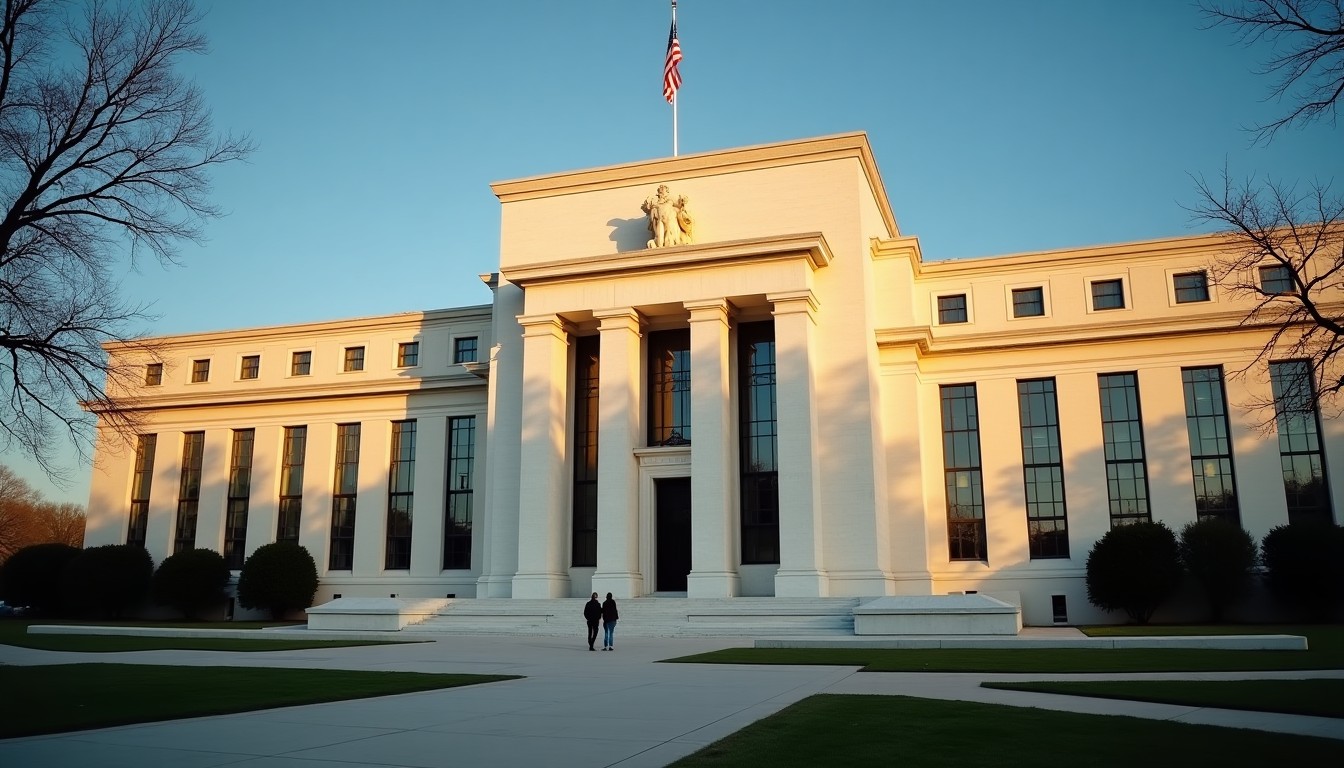
The Federal Reserve's establishment in 1913 marked the beginning of America's modern central banking era, but it would take decades of trial and catastrophic error before the institution truly understood its mission. As explored in Part 1, the Fed's founding followed the banking panics of the early 1900s, yet its early architects could scarcely have imagined the monetary disasters that would define the institution's first century. The Great Depression of the 1930s stands as central banking's greatest failure, fundamentally reshaping how we think about monetary policy's role in economic stability.
From the Fed's disastrous passivity during the banking collapse of 1930-1933 to Paul Volcker's inflation-slaying crusade of the early 1980s, the modern era of central banking has been defined by learning from catastrophic mistakes. Each crisis — the Depression, the Great Inflation of the 1970s, the 2008 Financial Crisis — forced monetary authorities to evolve their tools, mandates, and understanding of their profound influence over economic outcomes. This evolution culminated in the inflation targeting framework that dominated central banking from the 1990s through to the COVID-19 pandemic, establishing price stability as the anchor of monetary policy worldwide.
Today's central bankers operate with powers and responsibilities that would have been unimaginable to their Depression-era predecessors. Yet the fundamental tensions remain unchanged: balancing full employment against price stability, maintaining independence from political pressure, and managing the profound social consequences of monetary policy decisions. The recent inflation surge of 2021-2023 has tested these frameworks as severely as any crisis since Volcker's era, raising fundamental questions about the future direction of central banking.
Key Historical Facts: Central Banking 1930-2024
- Fed's Great Depression Failure: One third of US banks failed 1930–1933 — Fed did not act as lender of last resort
The Fed's Greatest Failure
The Great Depression stands as central banking's most devastating failure, transforming a severe recession into a decade-long catastrophe through monetary policy errors that would haunt the Federal Reserve for generations. Between 1930 and 1933, approximately 9,000 American banks failed — representing one-third of the nation's banking system — while the Fed stood paralyzed, failing to fulfill its most basic function as lender of last resort.
The intellectual architecture of this failure was laid bare decades later by Milton Friedman and Anna Schwartz in their seminal 1963 work "A Monetary History of the United States." Their meticulous research demonstrated that the Fed had actively contracted the money supply during the crucial period from 1929 to 1933, turning what might have been a typical recession into an economic catastrophe. The money supply fell by approximately one-third, while wholesale prices collapsed by 32% and industrial production plummeted by 54%.
The human cost was staggering. Unemployment reached 25% by 1933, with breadlines stretching across American cities. Bank runs became a weekly occurrence, as depositors rushed to withdraw their savings from institutions that appeared increasingly fragile. The Fed's regional structure, designed to prevent excessive concentration of power, instead created a system where decisive action proved impossible. Key figures like Benjamin Strong, the powerful head of the New York Fed who had provided leadership during the 1920s, had died in 1928, leaving a vacuum in monetary leadership precisely when decisive action was most needed.
Franklin Roosevelt's bank holiday of March 6-10, 1933, effectively shut down the entire American banking system, providing breathing space to reorganize the financial sector. The creation of the Federal Deposit Insurance Corporation (FDIC) in 1933 represented a fundamental shift in banking philosophy, providing government-backed deposit insurance to prevent future bank runs. Yet these measures addressed symptoms rather than the core problem of monetary policy failure.
"Let me end my talk by abusing slightly my status as an official representative of the Federal Reserve. I would like to say to Milton and Anna: Regarding the Great Depression. You're right, we did it. We're very sorry. But thanks to you, we won't do it again." — Ben Bernanke, November 8, 2002
This acknowledgment by future Fed Chair Ben Bernanke captured how profoundly Friedman and Schwartz's work had reshaped central banking thought. The lesson was stark: central banks possessed the power to create or prevent depressions through their control of the money supply. Never again could monetary authorities claim ignorance of their responsibility for systemic financial stability.
Wartime Finance and the Treasury Accord
World War II fundamentally altered the relationship between the Federal Reserve and the U.S. Treasury, subordinating monetary policy to the imperatives of war finance. Beginning in 1942, the Fed committed to supporting government bond prices, effectively pegging long-term interest rates at 2.5% to ensure the Treasury could finance the massive wartime expansion of government spending. This arrangement, while necessary for military victory, created the template for subsequent monetary policy disasters.
The wartime peg meant the Fed had surrendered control over the money supply, creating new dollars whenever necessary to maintain artificial interest rate targets. Government debt soared from $43 billion in 1940 to $269 billion by 1946, while the Fed's balance sheet expanded dramatically to accommodate Treasury financing needs. The inflationary consequences became apparent as wartime price controls were lifted: consumer prices rose 8.5% in 1946 and 14.4% in 1947.
The post-war economic boom intensified these pressures. With full employment restored and consumer demand unleashed after years of rationing, maintaining artificially low interest rates became increasingly problematic. The Fed found itself trapped between its commitment to support Treasury bond prices and its emerging understanding that monetary policy must respond to economic conditions rather than political convenience.
The Korean War's outbreak in June 1950 brought these tensions to a head. President Truman's administration demanded continued support for low rates to finance military operations, while Fed officials recognized that accommodating fiscal expansion during a period of full employment would unleash dangerous inflation. The resulting bureaucratic warfare culminated in the Treasury-Fed Accord of March 4, 1951, which freed the central bank from its obligation to support government bond prices.
This accord represents one of the most significant moments in central banking history, establishing the principle of monetary policy independence that would become the foundation for effective central banking worldwide. The agreement recognized that central banks could not simultaneously target interest rates and control inflation — a lesson that would be repeatedly forgotten and painfully relearned in subsequent decades.
Bretton Woods and the Dollar System
The 1944 Bretton Woods conference established a new international monetary system that placed the Federal Reserve at the center of global finance. Under this arrangement, the dollar was pegged to gold at $35 per ounce, while other major currencies were pegged to the dollar. This system granted the United States extraordinary privileges as issuer of the world's reserve currency, but also created unprecedented responsibilities for American monetary policy.
The Bretton Woods system reflected the economic realities of the post-war world, where the United States held approximately two-thirds of global gold reserves and accounted for half of world industrial production. Countries devastated by war needed dollars to finance reconstruction and trade, creating immediate demand for the new system. The International Monetary Fund and World Bank, also created at Bretton Woods, provided institutional support for this dollar-centered order.
However, the system contained a fundamental contradiction identified by economist Robert Triffin in 1960. For the world to have adequate dollar liquidity, the United States needed to run balance of payments deficits, providing dollars to foreign central banks and private markets. But persistent deficits would eventually undermine confidence in the dollar's convertibility to gold at the fixed $35 rate. This "Triffin Dilemma" created an inherent instability that would ultimately destroy the system.
Throughout the 1960s, mounting pressure on the gold peg reflected America's expanding fiscal and monetary commitments. President Johnson's "Great Society" domestic spending programs, combined with escalating Vietnam War costs, created large budget deficits. The Fed, while formally independent after the Treasury Accord, faced political pressure to accommodate these fiscal expansions. Foreign central banks began converting excess dollars to gold, steadily depleting U.S. gold reserves from $24 billion in 1957 to $10 billion by 1971.
President Nixon's decision to suspend gold convertibility on August 15, 1971, ended the Bretton Woods era and ushered in the modern system of floating exchange rates. This "Nixon Shock" freed central banks from the constraint of defending fixed exchange rates, but also removed the external discipline that gold convertibility had provided. The result would be a decade of monetary experimentation and, ultimately, the worst peacetime inflation in modern history.
The Great Inflation and Arthur Burns
The 1970s represent central banking's second great failure, demonstrating how political pressure and flawed economic theories could produce sustained inflation that damaged entire societies. Under Fed Chair Arthur Burns (1970-1978), American monetary policy accommodated rather than fought rising prices, creating a decade of economic instability that discredited Keynesian demand management and reshaped central banking philosophy.
Burns, a respected economist who had served as Eisenhower's chief economic advisor, possessed impeccable credentials but proved unable to resist political pressure from the Nixon administration. The prevailing economic orthodoxy of the early 1970s suggested that monetary policy could permanently trade higher inflation for lower unemployment — the infamous Phillips Curve trade-off that would be thoroughly discredited by subsequent events.
The 1973 Arab oil embargo provided the initial inflation shock, quadrupling oil prices and creating supply-side inflation pressures throughout the economy. Rather than tightening monetary policy to offset these pressures, Burns' Fed accommodated the oil price increases, arguing that higher interest rates could not address supply shocks. This accommodation transformed a one-time price level increase into sustained inflation as wages and prices began chasing each other upward.
"I am convinced that we can make further progress in reducing inflation while maintaining economic growth. But this will require not only sound monetary policy but also — and I emphasize this — sound fiscal policy and a host of other measures." — Arthur Burns, 1974, deflecting responsibility for inflation to fiscal policy and supply factors
The second oil shock of 1979 intensified these problems, but by then inflationary expectations had become entrenched in wage contracts, pricing decisions, and financial markets. Consumer price inflation reached 14.8% in 1980, while long-term interest rates soared above 15% as bond investors demanded compensation for expected future inflation. The economy experienced "stagflation" — simultaneous high inflation and unemployment — that orthodox Keynesian theory claimed was impossible.
The social consequences were profound. Fixed-income retirees saw their purchasing power devastated, while homebuyers faced mortgage rates exceeding 18%. Labor strikes became routine as workers demanded cost-of-living adjustments, while businesses struggled with unpredictable input costs. The dollar's value collapsed in foreign exchange markets, undermining America's international economic leadership and creating pressure for fundamental monetary policy reform.
The Volcker Disinflation
Paul Volcker's appointment as Fed Chair on August 6, 1979, marked the beginning of the most dramatic monetary policy transformation in American history. Standing 6'7" and wielding an ever-present cigar, Volcker possessed both the physical presence and intellectual conviction necessary to break the back of entrenched inflation, regardless of the economic and political costs.
Volcker's revolutionary decision, announced on October 6, 1979, was to target monetary aggregates rather than interest rates. This shift reflected monetarist influence and recognition that controlling inflation required the Fed to stop accommodating price pressures. The federal funds rate, which had averaged 11.2% in 1979, soared to unprecedented levels as the Fed allowed market forces to determine the price of money.
The peak came in June 1981, when the federal funds rate reached 20% — a level that would have been inconceivable to previous generations of central bankers. This monetary tightening induced the most severe recession since the 1930s, with unemployment reaching 10.8% in late 1982. Industrial production fell 12% from peak to trough, while the housing sector virtually collapsed under the weight of 18% mortgage rates.
The political pressure was immense. Farmers drove tractors through Washington to blockade the Fed building, protesting policies that had driven agricultural land values down by 40%. Construction workers mailed 2x4 wooden boards to Fed headquarters with messages attached: "This is all we have left to build with." Congressional Democrats called for Volcker's resignation, while Republicans worried about the electoral consequences of the deepest recession in five decades.
"The standard of living of the average American has to decline. I don't think you can escape that." — Paul Volcker, 1979, acknowledging the painful adjustment necessary to restore price stability
Yet Volcker held firm, recognizing that credibility required demonstrating the Fed's commitment to price stability regardless of short-term economic costs. The breakthrough came in 1982, when long-term bond yields began falling despite continued high short-term rates, signaling that financial markets finally believed the Fed would maintain its anti-inflation stance. Inflation fell from 14.8% in 1980 to 3.8% by 1982, while inflationary expectations — measured by the difference between nominal and inflation-indexed bond yields — collapsed.
The Volcker disinflation's success established the template for modern central banking: credible commitment to price stability, even at significant short-term economic cost. This demonstration that central banks could break entrenched inflation became the foundation for the inflation targeting frameworks that would dominate monetary policy for the next three decades.
The Age of Inflation Targeting
The Reserve Bank of New Zealand's adoption of a formal inflation target in 1990 launched a revolution in central banking that would reshape monetary policy worldwide. The RBNZ's framework, mandating inflation between 0-2% annually, represented the first attempt to provide central banks with a clear, measurable objective that could anchor expectations and enhance accountability.
The intellectual foundation for inflation targeting emerged from the recognition that central banks' primary long-term contribution to economic welfare was price stability. Unlike employment or growth, which are influenced by numerous non-monetary factors, inflation is ultimately a monetary phenomenon that central banks can control. By committing to a specific inflation target, central banks could provide the private sector with a clear anchor for wage negotiations, pricing decisions, and investment planning.
Australia's adoption of its 2-3% inflation target band in 1993 marked a crucial development, as the Reserve Bank of Australia became one of the first major central banks to embrace the framework. RBA Governor Bernie Fraser's announcement that monetary policy would be conducted to maintain underlying inflation between 2-3% over the medium term provided Australian businesses and workers with unprecedented clarity about monetary policy objectives.
| Central Bank | Inflation Target | Independence Date | Mandate |
|---|---|---|---|
| Reserve Bank of New Zealand | 1-3% | 1990 | Price Stability |
| Reserve Bank of Australia | 2-3% | 1996 | Dual (Price Stability & Full Employment) |
| Bank of England | 2% | 1997 | Price Stability |
| European Central Bank | 2% | 1999 | Price Stability |
| Federal Reserve | 2% | 1951/1977 | Dual (Price Stability & Full Employment) |
| Bank of Japan | 2% | 1998 | Price Stability |
The Bank of England's adoption of inflation targeting in 1997, coinciding with its operational independence from the Treasury, represented a watershed moment for the framework's credibility. The BoE's 2% target, combined with its transparent communication strategy and Monetary Policy Committee structure, became the template that other central banks would emulate. The European Central Bank's founding mandate of price stability in 1999 extended these principles to the world's second-largest economy.
Even the Federal Reserve, despite its dual mandate of price stability and full employment, gradually embraced inflation targeting principles. The Fed's formal adoption of a 2% inflation target in 2012 marked the culmination of a decades-long evolution toward greater transparency and accountability in monetary policy.
The success of inflation targeting during the "Great Moderation" period (1985-2007) seemed to vindicate the framework. Inflation remained low and stable across developed economies, while output volatility declined significantly compared to previous decades. Central bankers gained unprecedented credibility, with some observers declaring the "death of the business cycle" through superior monetary policy management.
The Post-GFC Era and New Challenges
The Global Financial Crisis of 2008 shattered confidence in the inflation targeting orthodoxy and forced central banks to adopt unprecedented policy measures. With policy rates at the zero lower bound and inflation persistently below target, central banks turned to unconventional tools: quantitative easing, negative interest rates, and forward guidance replaced traditional interest rate adjustments as the primary tools of monetary policy.
The RBA's response exemplified the global shift. After cutting the cash rate from 7.25% in 2008 to just 0.1% by November 2020, the bank launched its first quantitative easing program, purchasing government bonds to provide additional monetary stimulus. These measures, unthinkable during the inflation targeting era's early years, became standard practice across developed economies.
The decade following the GFC presented central banks with the opposite problem from the 1970s: persistently below-target inflation despite aggressive monetary expansion. Core inflation in the United States averaged just 1.7% from 2009-2019, well below the Fed's 2% target. Similar patterns emerged across developed economies, raising questions about whether structural changes in technology, globalization, or demographics had fundamentally altered the inflation process.
The COVID-19 pandemic and subsequent inflation surge of 2021-2023 provided the severest test of inflation targeting since its adoption. As supply chain disruptions, fiscal stimulus, and pent-up demand combined to drive inflation above 9% in the United States and 7.8% in Australia, central banks faced their first sustained above-target inflation in over two decades.
The RBA's response demonstrated both the persistence and adaptation of inflation targeting principles. After initially characterizing inflation as "transitory," the bank began raising rates aggressively in May 2022, lifting the cash rate from 0.1% to 4.35% by November 2023. This 425 basis point tightening cycle, while modest compared to Volcker's era, represented the most aggressive monetary tightening in Australia since the early 1990s recession.
"The Board remains resolute in its determination to return inflation to target and will do what is necessary to achieve that." — RBA Governor Philip Lowe, November 2022, echoing Volcker's commitment to price stability regardless of short-term costs
The current era poses fundamental questions about central banking's future direction. Climate change, technological disruption, rising inequality, and geopolitical fragmentation all challenge traditional monetary policy frameworks. Some economists advocate for higher inflation targets to provide more policy space during recessions, while others propose incorporating financial stability or employment targets into formal mandates.
The relationship between fiscal and monetary policy, seemingly settled since the Treasury-Fed Accord, has become contentious again as governments accumulated massive debts during the pandemic. Questions about central bank independence, the appropriate scope of monetary policy, and the distribution of policy costs across society have returned to prominence after decades of consensus.
As central banks confront these challenges, the historical lessons remain relevant. The Great Depression demonstrated the catastrophic consequences of monetary policy failure during crises. The Great Inflation showed how political pressure and flawed economic theories could undermine price stability. The Volcker disinflation proved that credible commitment to anti-inflation policies could break even entrenched expectations. The inflation targeting era established transparency and accountability as essential features of effective central banking.
These lessons will guide central bankers as they address the challenges ahead. Whether the current framework proves adaptable to new circumstances, or whether fundamental reforms become necessary, depends on central banks' ability to learn from their remarkable century of trial, error, and gradual mastery of monetary policy's profound influence over economic life. The stakes, as the Great Depression and Great Inflation demonstrated, could hardly be higher.
Frequently Asked Questions
What is inflation targeting and how does the RBA use it?
Inflation targeting is a monetary policy framework where central banks aim to keep inflation within a specific range. The RBA targets 2-3% annual inflation over the medium term, using the cash rate as its primary tool. This approach provides transparency and predictability for Australian investors and businesses when making long-term financial decisions.
How did the Great Depression change central banking in Australia?
The Great Depression led to greater central bank independence and expanded powers. In Australia, it resulted in the Commonwealth Bank gaining more authority over monetary policy and banking regulation. These changes established the foundation for modern central banking, including the RBA's eventual creation in 1960 and its current role in maintaining financial stability.
What was the Bretton Woods system and how did it affect Australian investors?
Bretton Woods (1944-1971) was a fixed exchange rate system where currencies were pegged to the US dollar. For Australian investors, it meant stable exchange rates but limited monetary policy flexibility. When it collapsed, Australia eventually moved to a floating exchange rate in 1983, giving the RBA more control over domestic monetary policy.
How does modern central banking policy impact ASX investments?
Central banking policies, particularly RBA interest rate decisions, significantly impact ASX-listed companies and investment returns. Lower rates typically boost growth stocks and REITs, while higher rates favor banks and value stocks. Understanding RBA's inflation targeting framework helps investors anticipate policy changes and adjust portfolios accordingly for sectors like financials, property, and utilities.
Recommended Reading

Key Statistics
Fed's Great Depression Failure
One third of US banks failed 1930–1933 — Fed did not act as lender of last resort
Bretton Woods
1944 — USD pegged to gold at $35/oz, other currencies pegged to USD
Fed Independence Restored
1951 Treasury-Fed Accord — ended wartime obligation to support bond prices
Volcker's Peak Rate
20% federal funds rate June 1981 — broke the back of 1970s inflation
Inflation Targeting Pioneer
Reserve Bank of New Zealand 1990 — first central bank to adopt formal inflation target
RBA Inflation Target
2–3% target band adopted 1993 — now the anchor of Australian monetary policy