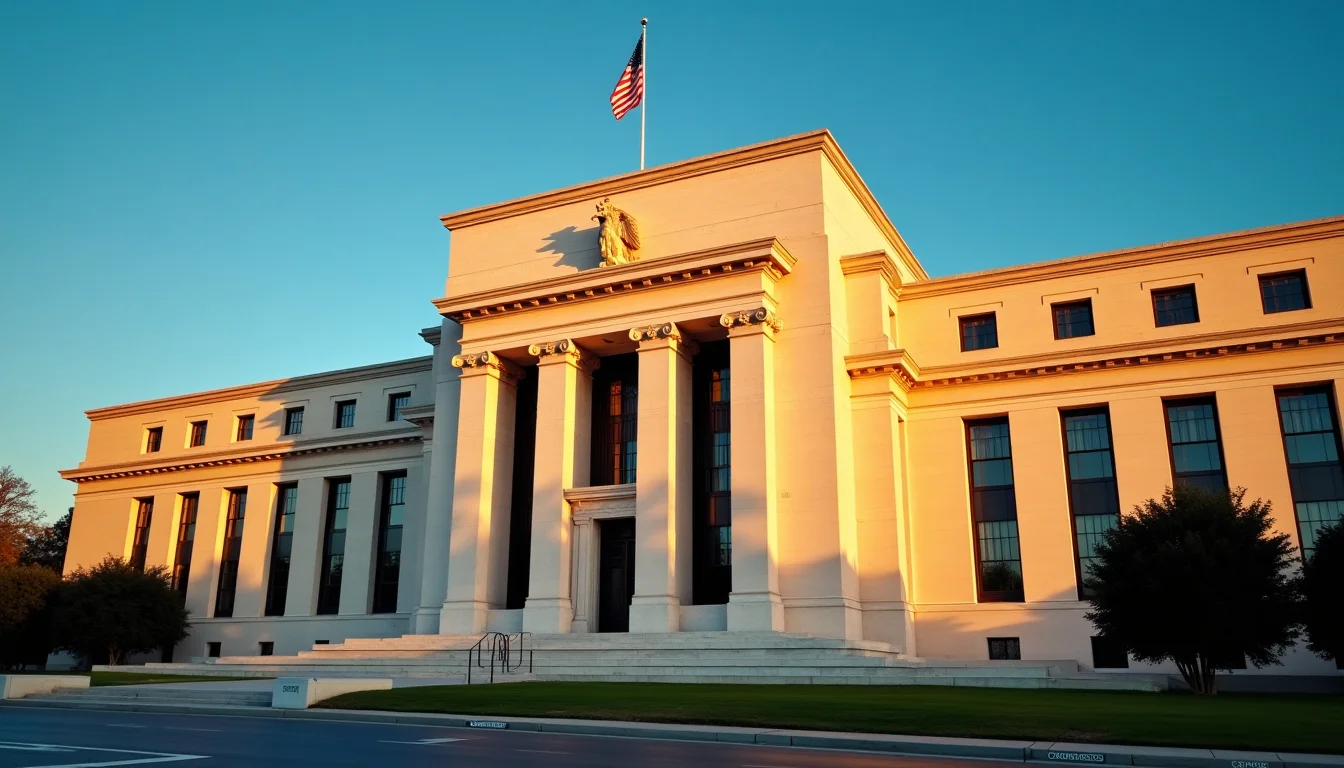
Trump has opened a formal inquiry into Federal Reserve Governor Lisa Cook, according to the New York Times. The move lands while the US 10-year Treasury yield trades at 5.22%, a full 147 basis points above the current Fed Funds Rate of 3.75%. That gap is the real story for bond investors this week, not the political theatre around it.
A Committee Aimed at a Sitting Fed Governor
The Financial Times reports that Trump has launched a committee to investigate Cook, marking one of the most direct challenges to a Federal Reserve board member in recent memory. The headline detail is narrow: a White House-directed inquiry into a sitting governor. What it signals is broader. Investors have spent two years pricing in a Fed that sets policy independent of the executive branch. This inquiry tests that assumption in real time.
Fed governors serve fixed, staggered terms precisely to insulate monetary policy from electoral cycles. An inquiry initiated by the White House into one governor's conduct, regardless of its eventual findings, inserts political risk into a institution that bond markets have historically priced as apolitical. That repricing, if it happens, shows up first in long-duration yields rather than in equities.
Rate Outlook: Yields Diverge From the Policy Rate
The Fed Funds Rate sits at 3.75%. The 10-year yield sits at 5.22%. That spread is wide by recent standards and suggests bond investors are demanding compensation beyond near-term policy expectations. Part of that premium reflects US inflation running at 2.6%, still above target. Part of it may now reflect a fresh independence premium tied directly to the Cook inquiry.
Compare the US setting to other major central banks. The ECB holds its rate at 2.50%. The Bank of Japan sits at 0.98%. Both operate with policy rates well below the Fed's, yet neither faces a comparable domestic political challenge to a board member right now. If the market concludes the Fed's independence is genuinely in question, the US term premium could widen further, even if the Fed Funds Rate itself stays anchored near 3.75% at the next meeting.
A central bank whose independence is publicly contested tends to see its long-term borrowing costs rise even when its policy rate does not move. The spread between short and long rates, not the headline rate itself, is where that concern usually surfaces first.
Markets Shrug, For Now
Equity markets have not panicked. The S&P 500 sits at 7,811.54, up 0.59% on the session. The Dow is at 51,654.95, up 0.83%. The VIX has actually fallen 3.7% to 14.84, and the composite sentiment reading stands at 76, firmly in risk-on territory. None of that looks like a market bracing for a Fed independence crisis.
Precious metals tell a slightly different story. Gold trades at $4,186.91 and silver at $61.05, up 2.73% on the day. Platinum has jumped 3.12% to $1,693. These moves are consistent with investors adding a modest hedge against policy uncertainty without abandoning risk assets altogether. The muted VIX alongside firmer metals suggests the market is treating the Cook inquiry as a tail risk worth insuring against, not a base case.
There is a parallel worth drawing to digital assets. Bitcoin trades at $83,034, essentially flat, while Ethereum is up 0.7% to $2,510. Crypto markets often move in step with macro uncertainty around monetary policy credibility. Readers tracking how digital assets respond to central bank stress can find ongoing coverage of that relationship at Coinhours, where crypto price action is tracked against shifting macro conditions including Fed policy risk.
Why Bond Markets Are the Real Barometer
Equity indices can rally on earnings and liquidity even as institutional credibility erodes underneath. Bond markets are less forgiving. The 10-year yield at 5.22% already embeds a premium that goes beyond the current 2.6% inflation print. If the Cook inquiry drags on or escalates, watch the long end of the curve, not the S&P 500, for the market's real verdict on Fed independence.
Readers unfamiliar with how bond pricing reflects these political and inflation risks can review the fundamentals in Bonds Explained. The history of how central banks earned their independence in the first place, and how fragile that independence has proven at points in the past, is covered in The History of Central Banking Part 2 and Part 1.
What to Watch Next
The inquiry into Cook is still in its early stages based on both the NYT and FT reporting. No findings have been announced. The market reaction so far is contained: equities higher, VIX lower, metals modestly firmer. That calm could change quickly if the inquiry produces specific allegations or if other Fed officials respond publicly. Investors with exposure to long-duration Treasuries should track the 10-year yield relative to the Fed Funds Rate as the clearest signal of whether markets are pricing in a genuine independence discount. For broader macro context on how political risk interacts with rate policy, see Macro Intelligence.