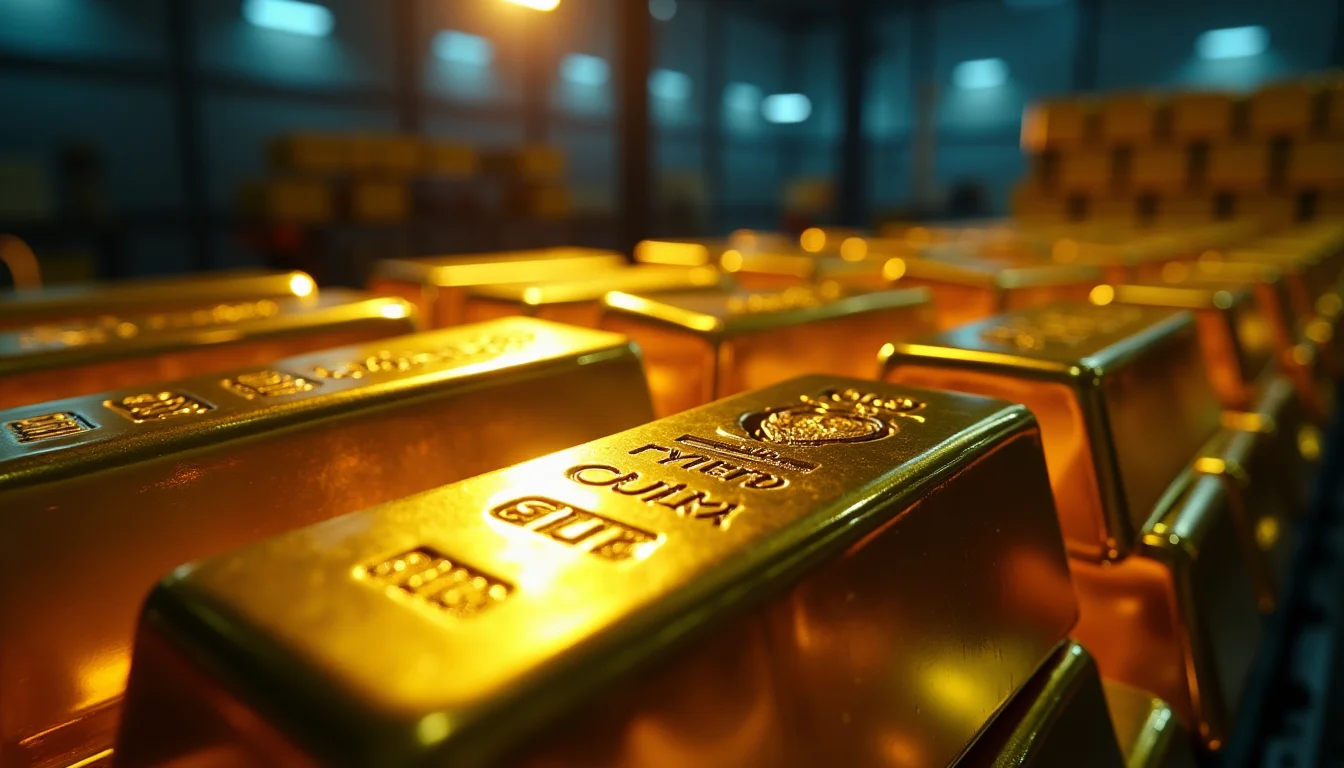
SMH Business reported that Iran's war has spread to threaten the Bab el-Mandeb strait, with Iran-backed Houthi militia claiming missile and drone strikes on Saudi oil tankers in the Red Sea, triggering fresh fuel security warnings and adding a new layer of geopolitical risk to an already elevated gold market. The move came as the Dow Jones Industrial Average shed 2.19% to 51,594 and the S&P 500 fell 1.52% to 7,316 — a textbook risk-off rotation into hard assets.
Red Sea Escalation and the Fuel Security Warning
The Red Sea corridor handles a significant share of global energy shipping. Any disruption to this route raises transit costs, delays fuel delivery, and adds insurance premiums across the supply chain. WTI crude oil edged down 0.3% to $84.21 on the session, but energy market participants are closely watching whether the Iranian conflict expands further into active shipping lanes. A sustained blockade or missile threat targeting tanker traffic would tighten global fuel supply at a time when inflation remains sticky — US CPI stands at 2.6%, well above the Federal Reserve's 2% target.
The geopolitical risk premium in gold is not new, but its current magnitude reflects a convergence of factors. When supply chains for essential commodities face physical disruption risk, institutional capital has historically re-weighted toward gold as a store of value that carries no counterparty exposure. That dynamic is playing out in real time this week. Silver also gained 0.48% to $58.37, while platinum rose 1.62% to $1,628 and palladium added 2.46% to $1,283 — the entire precious metals complex moving in the same direction confirms broad safe-haven demand rather than a gold-specific technical move.
Equity Sell-Off Amplifies Gold's Relative Appeal
Thursday's equity rout was broad and deep. The NASDAQ 100 dropped 2.06% to 27,192, the Russell 2000 fell 1.61% to 2,906, and the ASX 200 declined 0.78% to 8,967. The Shiller CAPE ratio sits at 39.9 — a level that historically signals elevated valuation risk in US equities. When stretched valuations meet geopolitical shock, the downside response in risk assets tends to be sharper than the headline earnings data alone would imply.
The VIX volatility index eased 5.66% to 19.49 on the session — an apparent contradiction with falling equities, but one that reflects options positioning dynamics more than genuine complacency. A VIX near 20 still signals material uncertainty. For context, valuations at this level combined with geopolitical disruption to commodity supply chains have historically preceded extended periods of gold outperformance relative to equities. Investors tracking the gold as a safe haven asset framework will recognise this setup as consistent with prior conflict-driven risk premiums in 2011 and 2022.
The capital flow pattern is visible across asset classes. European equities diverged from US markets, with the FTSE 100 up 0.19% to 10,929, the Euro Stoxx 50 gaining 0.6% to 6,286, and the IBEX 35 rising 1.2% to 19,645. This suggests the sell-off is concentrated in US-listed risk assets rather than representing a global flight from equities — which in turn points toward currency and rate dynamics as an additional driver of gold demand.
Central Bank Policy and the Rate Differential Backdrop
Gold's strength at $4,080 must be read against the current rate environment. The Fed Funds Rate sits at 3.63%, the ECB rate at 2.25%, and the Bank of Japan at 0.84%. The USD/JPY rate of 162.73 reflects a yen that remains structurally weak, reducing the hedging incentive for Japanese holders of USD assets while simultaneously making dollar-denominated gold more attractive priced in yen terms. Meanwhile, the USD/CHF at 0.8124 and EUR/USD at 1.1485 show a dollar that is softening against safe-haven currencies — a condition that historically correlates with gold appreciation.
Central banks globally have been net buyers of gold for multiple consecutive years, reducing their dependence on US Treasuries as reserve assets. The US 10-year Treasury yield at 4.61% offers real yield competition to gold, but geopolitical disruption to trade routes compresses the confidence investors place in sovereign bond safety — particularly for central banks that import significant volumes of energy through contested corridors. When those institutions shift even marginally toward physical gold accumulation, the price impact is outsized given gold's relatively inelastic annual supply growth. This is the structural driver sitting beneath today's 1.38% gain.
Gold at $4,080 with a Shiller CAPE of 39.9 and active Red Sea conflict represents a convergence of geopolitical risk premium, equity valuation stress, and central bank reserve diversification — the same three-factor alignment that drove gold from $1,600 to $2,070 between 2020 and 2023.
Background: Gold as a Reserve and Risk Asset
Understanding why gold responds to geopolitical disruption requires understanding its dual role as both a financial reserve asset and a commodity. Unlike oil, wheat, or copper — all of which rose sharply this week, with wheat up 3.59% to $684.50 and copper gaining 2.25% to $6.45/lb — gold has no industrial supply chain that the conflict directly disrupts. Its price response is purely financial: a reassessment of risk premiums by portfolio managers and central banks simultaneously. Readers building a foundational understanding of this dynamic should consult the gold investing guide, which covers the mechanics of holding gold across physical, ETF, and mining stock formats.
The broader precious metals investing framework is also relevant here. Silver, platinum, and palladium all have industrial demand components that make their price behaviour distinct from gold in most conditions. The fact that all four metals gained together on Thursday underscores the dominance of macro and geopolitical factors over sector-specific supply-demand dynamics in this session. For those assessing gold against alternative stores of value, Bitcoin fell 0.09% to $64,610 — a signal that crypto is not functioning as a geopolitical hedge in this particular risk event, a contrast explored in depth in the gold vs Bitcoin store of value comparison. Analysts at Bubblepedia have documented how commodity cycles driven by geopolitical disruption historically produce sustained rather than transient price moves in gold.
What Investors Should Watch Next
The immediate variable is the geographic scope of the Red Sea conflict. If Iranian activity extends to active interdiction of energy tankers, WTI oil's current $84.21 level will face upward pressure, adding an inflationary impulse that complicates Fed rate decisions and further supports gold. The AUD/USD at 0.6975 means gold priced in Australian dollars sits at A$5,810 — investors with Australian dollar exposure to gold holdings are seeing amplified returns relative to the USD spot price move. The Beetaloo energy infrastructure development in Australia's Northern Territory adds a domestic dimension to energy security conversations, though its near-term impact on fuel pricing remains limited. With gold breaking through $4,000 and holding, the next test for positioning will come from the Fed's July meeting response to a 2.6% US inflation print — any signal of delayed easing will test whether gold's geopolitical bid is durable enough to absorb rate headwinds.