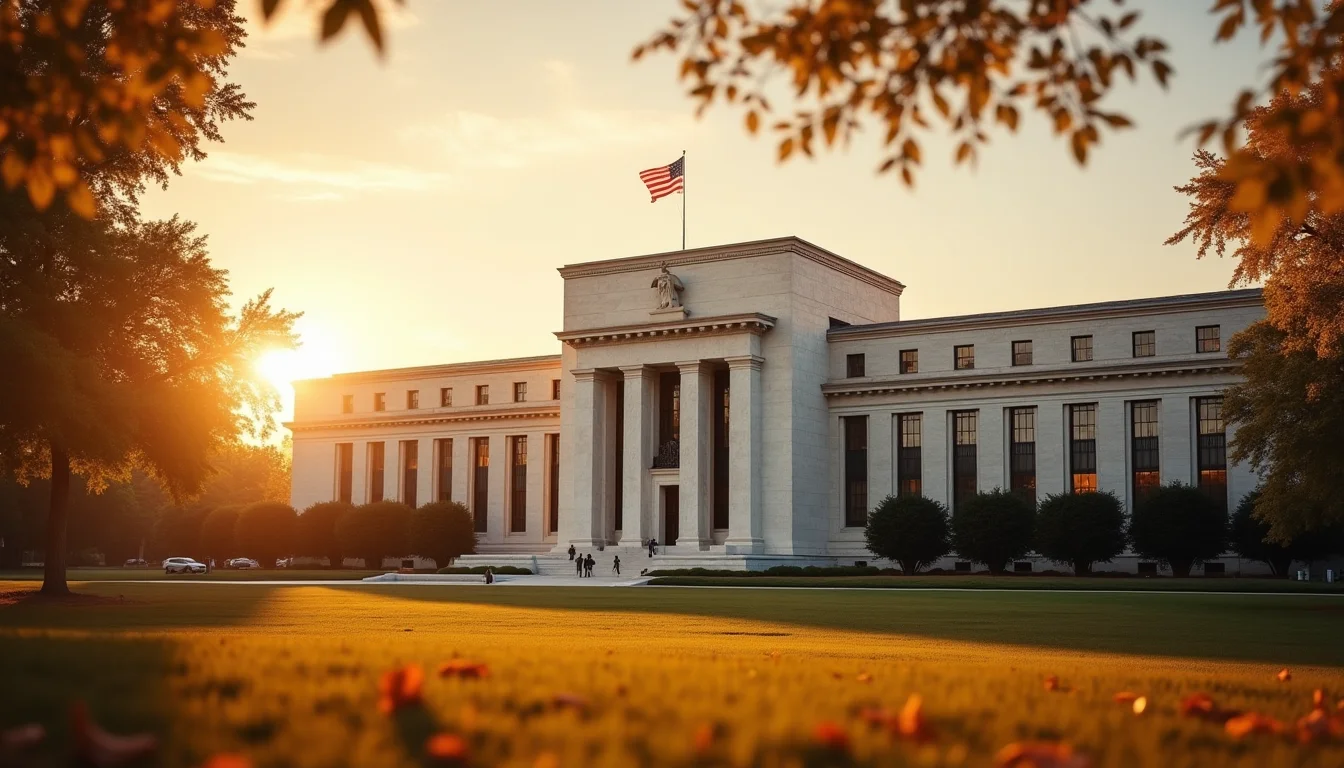
A methodological revision at the US Bureau of Economic Analysis is set to reduce readings of the Federal Reserve's preferred inflation measure — the Personal Consumption Expenditures price index — according to the Financial Times The timing matters: with the Fed Funds Rate currently at 3.63% and US inflation running at 2.6%, the central bank's July meeting now carries added analytical complexity. A statistical change that mechanically softens the headline inflation figure could give policymakers political cover to ease, even before underlying price pressures have genuinely subsided.
What the BLS Change Actually Does
The BLS periodically revises its methodology for measuring consumer prices. When the weights or formulas feeding into the PCE index are updated, the resulting inflation readings can shift without any real change in the prices consumers are paying. The Financial Times reports that the Bureau of Economic Analysis — the agency that publishes the PCE index — is set to make adjustments that will lower the Fed's preferred inflation gauge.
For historical context on this cycle, see CoinHours macro-crypto correlation indicators.
This is not the first time methodology has mattered to monetary policy. In the early 1980s, changes to how housing costs were measured in the CPI had meaningful effects on reported inflation and, by extension, on the rate decisions of the modern inflation-targeting era that followed the Volcker shock. Statistical revisions do not change the economic reality households face at the checkout, but they directly shape the data the Fed publicly cites when justifying its decisions.
For investors watching the Fed's next move, the key question is whether policymakers treat a methodology-driven decline in PCE as genuine disinflation. If the Fed signals that softer reported inflation — even if statistically constructed — justifies cuts, markets will likely price more easing more quickly. If the Fed looks through the revision and holds, the signal is hawkish regardless of the headline print.
The July Fed Meeting: What Is Actually at Stake
According to the New York Times the Federal Reserve's July meeting is being watched for any shift in the central bank's guidance on the pace of future rate changes. The Fed Funds Rate sits at 3.63% — above the ECB's 2.25% and well above the Bank of Japan's 0.84% — placing the US in a structurally different position from its major peers.
The 10-year US Treasury yield at 4.65% tells its own story. A spread of more than 100 basis points between the 10-year and the Fed Funds Rate suggests the bond market is not fully convinced that rates will come down quickly. Meanwhile, the VIX has risen 8.51% to 19.76 — not yet in fear territory, but meaningfully elevated compared to recent sessions. Equity markets are leaning risk-off: the Dow is down 1.61%, the S&P 500 is down 0.84%, and the NASDAQ 100 has shed 1.31%.
WTI crude oil's 7.24% rise to $85.00 per barrel introduces an additional complication. Energy is a significant input cost, and a sustained oil rally could push actual consumer prices higher even as the revised PCE prints lower. That divergence between reported and felt inflation creates a credibility challenge for the Fed if it moves prematurely on the basis of a methodology-adjusted number.
Safe-Haven Flows and the Geopolitical Premium
Gold at $4,001 per ounce — even with a modest 0.46% pullback today — reflects a market that has been pricing in elevated geopolitical risk and uncertainty about the real path of real interest rates. The metal has sustained a position above $4,000 while equity markets correct, a pattern consistent with genuine safe-haven demand rather than momentum speculation. The Shiller CAPE ratio at 40.57 signals that US equities remain historically expensive, which amplifies the relative appeal of non-correlated assets when volatility rises.
The divergence in regional equity markets is also telling. The Hang Seng gained 1.96% and the Shanghai Composite rose 0.4%, while the Nikkei fell 1.49%, the Euro Stoxx 50 dropped 0.63%, and the IBEX 35 declined 1.43%. Asian markets with direct exposure to US-China trade dynamics are reading the macro picture differently from Western markets. That split reflects the degree to which geopolitical positioning — not just rate expectations — is driving asset allocation. Investors tracking historical commodity and asset cycles may find useful context in Bubblepedia's analysis of commodity supercycles and safe-haven premiums.
When statistical revisions lower reported inflation without reducing the prices consumers actually pay, central banks face a credibility test: do they respond to the number, or to the reality? The bond market, with the 10-year Treasury at 4.65%, appears to be betting the Fed responds to the reality.
Background: Fiat Systems, Measurement, and Monetary Credibility
The tension between reported and actual inflation is not new to the fiat era Since the abandonment of Bretton Woods, central banks have operated with discretionary mandates that depend heavily on data quality. When the data itself is revised, the credibility of the mandate comes under pressure. The Fed's 2% PCE target was formally adopted in 2012, but the underlying philosophy — that stable, measured inflation is compatible with full employment — has roots in the post-Volcker settlement of the late 1980s.
Understanding how central banks developed that mandate, and the political pressures they faced when inflation data conflicted with economic reality, provides important context for the current moment. The early history of central banking shows that institutional credibility, once lost, is expensive to restore — a lesson that weighs on any Fed governor considering whether to ease on the back of a methodologically softened number.
What Investors Should Watch
Three variables will determine how this plays out. First, the Fed's July statement language: any shift toward describing current policy as sufficiently restrictive would signal openness to cuts regardless of whether the PCE revision has landed yet. Second, the oil price: WTI at $85.00 and rising will keep actual inflation pressures alive even if the PCE prints softer. Third, the bond market's response: a sustained move higher in the 10-year yield above 4.65% would indicate that traders are not giving the Fed credit for the methodology-driven disinflation story.
For investors managing diversified portfolios, the current configuration — elevated VIX, gold above $4,000, rising oil, and a Fed facing a statistical windfall on inflation — calls for careful separation of reported data from underlying conditions. Rate-sensitive assets remain exposed if the bond market proves right that real rates stay higher for longer. Investors seeking macro context can find additional analysis at WealthWatchPro's Macro Intelligence hub The July meeting statement, and the press conference that follows, will be the clearest signal yet of whether the Fed intends to use the BLS revision as cover to begin the next easing cycle.