
The History of Stock Markets — Part 1: From the Dutch East India Company to the Great Crash
The first stock exchange emerged in Amsterdam in 1602 with the Dutch East India Company, leading to modern equity markets including the New York Stock Exchange in 1792, culminating in the dramatic market crash of 1929.
Key Takeaways
- →The Dutch East India Company created the first stock exchange in 1602, establishing the foundation for modern equity trading systems.
- →The New York Stock Exchange, founded in 1792, became the world's largest stock market and remains influential for global investors.
- →The 1929 stock market crash demonstrated how quickly equity values can collapse, wiping out fortunes within days of trading.
- →Early stock markets were driven by speculation and limited regulation, leading to boom-bust cycles that still occur today.
- →Understanding historical market crashes helps investors recognize warning signs and implement risk management strategies in modern portfolios.
First Stock Exchange
Amsterdam Stock Exchange 1602 — established to trade VOC shares
First Joint-Stock Company
Dutch East India Company (VOC) 1602 — raised 6.4 million guilders from public
London Stock Exchange
Founded 1801 — formalising trading that had occurred in coffee houses since 1698
New York Stock Exchange
Founded May 17 1792 — the Buttonwood Agreement under a buttonwood tree
Black Thursday
October 24 1929 — the opening day of the Wall Street Crash
Dow Jones Peak 1929
381 points on September 3 1929 — would not recover to this level until 1954
The modern stock market, with its electronic trading floors, complex derivatives, and trillion-dollar market capitalisations, represents the culmination of four centuries of financial innovation, speculation, and regulatory response. What began in 1602 as a simple mechanism for Dutch merchants to share the enormous risks and rewards of Asian spice trading has evolved into the primary engine of global capitalism, channelling the savings of millions of investors into the productive enterprises that power modern economies.
This evolutionary journey from Amsterdam's cobblestoned Damrak to Wall Street's electronic exchanges encompasses not merely the technical development of trading mechanisms, but the fundamental transformation of how societies organise capital, distribute risk, and allocate resources across time and space. The joint-stock company, limited liability, organised exchanges, professional intermediaries, and securities regulation—each represents a response to specific problems that emerged as markets grew in scale and complexity.
The period from 1602 to 1929 establishes the foundational architecture of public equity markets: the separation of ownership from management, the pricing of risk through competitive bidding, the amplification of both wealth and destruction through leverage, and the recurring cycle of innovation, speculation, and regulatory response that continues to define financial markets today.
Key Historical Milestones
The Problem of Capital
The emergence of joint-stock companies in the early 17th century addressed a fundamental constraint that had limited commercial enterprise for millennia: the mismatch between the capital requirements of large-scale ventures and the resources available to individual merchants or families. The spice trade between Europe and Asia required enormous upfront investments—purchasing ships, provisioning expeditions for voyages lasting years, maintaining fortified trading posts across vast distances, and absorbing the total loss of vessels to storms, pirates, or warfare.
Traditional partnership structures, while adequate for local trade or short-term ventures, proved inadequate for enterprises requiring capital commitments that exceeded the wealth of even the richest merchant families. Medieval guilds had demonstrated the benefits of collective organisation, but their rigid structures and geographic limitations prevented the flexible capital allocation required for intercontinental commerce.
The joint-stock company represented a revolutionary legal innovation that separated ownership from operational control and, more importantly, limited investor liability to their initial capital contribution. This limited liability principle transformed risk calculation by allowing investors to participate in potentially lucrative but dangerous ventures without risking their entire personal wealth. A merchant could invest 1,000 guilders in a spice trading venture knowing that, regardless of outcome, his maximum loss was precisely 1,000 guilders—not his house, his other business interests, or his family's future.
This legal architecture enabled the aggregation of capital from hundreds or thousands of individual investors, each contributing according to their means and risk tolerance, while professional management directed operations according to expertise rather than wealth. The transferability of shares through secondary markets provided liquidity that further encouraged investment, as capital need not remain locked in multi-year ventures.
The Dutch East India Company
The Vereenigde Oostindische Compagnie (VOC), chartered by the Dutch States General on March 20, 1602, holds the distinction of being both the world's first multinational corporation and the first company to issue stock to the general public. The VOC raised 6.4 million guilders through its initial public offering—equivalent to approximately $100 million in today's purchasing power—from 1,800 investors ranging from wealthy merchants to middle-class artisans.
The Amsterdam Stock Exchange, established simultaneously with the VOC's public listing, created the world's first formal secondary market for corporate securities. Trading occurred on the Damrak, Amsterdam's main thoroughfare, where investors could buy and sell VOC shares at prices determined by supply and demand rather than arbitrary valuations. The exchange operated with remarkable sophistication: participants engaged in short selling (borrowing shares to sell in expectation of price declines), options trading (contracts for future delivery at predetermined prices), and margin trading (purchasing shares with borrowed money).
"During the height of Tulip Mania in February 1637, a single tulip bulb of the Semper Augustus variety sold for 6,000 guilders—equivalent to the price of a grand Amsterdam canal house. Within weeks, tulip prices collapsed by 95%, ruining speculators who had mortgaged their homes to finance bulb purchases. This first recorded speculative bubble demonstrated the explosive potential and destructive power of mass market psychology that would characterise financial markets for centuries to come."
The tulip mania of 1636-1637, while technically separate from stock trading, occurred within the same financial ecosystem and demonstrated how speculative fever could spread through organised markets. For deep analysis of the Tulip Mania and other historic market bubbles, see Bubblepedia →
The VOC maintained its dividend payments and share price appreciation for nearly two centuries, becoming the most valuable company in history with a peak market capitalisation equivalent to $7.9 trillion in modern terms. However, the company's eventual decline illustrated fundamental problems of corporate governance that persist today: management entrenchment, conflicts between shareholders and directors, and the challenges of monitoring distant operations. By the 1790s, corruption, strategic blunders, and competition from British and French rivals had driven the VOC into bankruptcy, providing early lessons about the importance of accountable management and transparent financial reporting.
Coffee Houses to Exchanges
London's financial markets developed organically within the coffee houses of Change Alley and Cornhill, where merchants, ship captains, and investors gathered to exchange information and conduct business. Jonathan's Coffee House, established in 1680, became the primary venue for stock trading, with prices for major securities posted daily and auctions conducted according to informal but widely understood rules.
John Castaing began publishing "The Course of the Exchange and Other Things" in 1698, providing London's first regular stock price quotations and establishing the principle of market transparency that remains fundamental to modern exchanges. By the 1760s, a distinct community of professional stockbrokers had emerged, leading to conflicts with merchants who objected to broker commissions and exclusive dealing arrangements.
The London Stock Exchange was formally established in 1801 when brokers purchased a dedicated building in Capel Court, creating the institutional framework for organised trading that would be replicated globally. The exchange implemented membership requirements, standardised procedures, and ethical codes that reduced counterparty risk and increased market confidence.
Across the Atlantic, American securities trading began under the buttonwood tree at 68 Wall Street, where 24 merchants and brokers signed the Buttonwood Agreement on May 17, 1792. This compact established the New York Stock Exchange's founding principles: members would trade securities only among themselves, charge minimum commissions of 0.25%, and give preference to fellow members in all dealings.
The expansion of telegraph networks during the 1840s transformed regional exchanges into components of an integrated national market. Stock prices in New York reached Boston, Philadelphia, and Chicago within minutes rather than days, enabling arbitrage trading that aligned prices across geographic markets. This technological integration presaged the global electronic markets that would emerge 150 years later.
The Robber Barons and Industrial America
The railroad construction boom following the Civil War created America's first great equity mania, as investors recognised that rail transport would reshape the continental economy. Railroad securities dominated early trading volumes on the NYSE, with companies like the New York Central, Pennsylvania Railroad, and Union Pacific attracting capital from both domestic and European investors seeking exposure to American economic growth.
The era produced legendary market manipulators whose tactics remain relevant to modern investors. Jay Gould orchestrated elaborate schemes involving stock pools, media manipulation, and political corruption to engineer dramatic price movements in railroad shares. His battle with Cornelius Vanderbilt for control of the Erie Railroad in 1868 involved printing millions of dollars in unauthorised stock certificates—an early example of dilution risk that shareholders face today.
The Panic of 1873 demonstrated how interconnected financial markets could amplify economic shocks across sectors and regions. The failure of Jay Cooke & Company, which had underwritten Northern Pacific Railroad bonds, triggered a chain reaction of bank failures and railroad bankruptcies that drove the NYSE to suspend trading for ten days. Similar systemic risks manifested during the Panic of 1893, when agricultural depression combined with railroad overexpansion to produce widespread business failures.
J.P. Morgan emerged as the dominant financial figure of the era through his role in reorganising bankrupt railroads and creating industrial monopolies. Morgan's ability to marshal capital for large-scale reorganisations demonstrated the power of concentrated financial resources, while his formation of U.S. Steel in 1901—the world's first billion-dollar corporation—illustrated how public markets could finance industrial consolidation on an unprecedented scale.
Charles Dow launched the Dow Jones Industrial Average on May 26, 1896, with an index of 12 companies designed to represent the broader industrial economy:
| Original Dow Components (1896) | Modern Equivalent Sector |
|---|---|
| American Cotton Oil | Consumer Goods |
| American Sugar | Consumer Staples |
| American Tobacco | Consumer Staples |
| Chicago Gas | Utilities |
| Distilling & Cattle Feeding | Consumer Staples |
| General Electric | Industrials (Still in Dow until 2018) |
The evolution from Dow's original 12 industrial companies to today's 30-component index reflects the transformation of the American economy from heavy manufacturing and commodities toward technology, healthcare, and financial services.
The Roaring Twenties
The post-World War I economic boom created conditions for the most dramatic bull market in American history, driven by technological innovations in electricity, automobiles, radio, and mass production techniques pioneered by Henry Ford. Corporate profits soared as companies achieved unprecedented economies of scale, while new consumer products created entirely new industries virtually overnight.
The Federal Reserve's low interest rate policies, designed to help Britain return to the gold standard, provided cheap credit that fuelled speculative investment. Margin buying became widespread, with investors required to put down only 10% of a stock's purchase price while borrowing the remaining 90% from brokers. This 10:1 leverage ratio amplified both gains and losses, creating the potential for enormous wealth creation or complete ruin.
Investment trusts emerged as the era's preferred investment vehicle, offering small investors professional management and diversified portfolios. However, many trusts employed additional leverage, borrowing money to purchase stocks and then issuing their own shares to the public. This pyramiding effect meant that investment trust shares could fluctuate far more dramatically than their underlying holdings, creating layers of leverage that multiplied market movements.
Radio broadcasting transformed market participation by bringing Wall Street into homes across America. Financial programming, stock tips, and market commentary created a culture of speculation that extended far beyond traditional investment circles. Taxi drivers, barbers, and housewives became active stock traders, often using borrowed money to finance their purchases.
The Dow Jones Industrial Average reflected this euphoria, rising from 63 points in August 1921 to a peak of 381 points on September 3, 1929—a 500% increase in eight years. Popular stocks like Radio Corporation of America (RCA) rose from $85 to $420 per share during 1928 alone, while investment trust shares often traded at substantial premiums to their underlying asset values.
The Great Crash
The market's speculative excess reached its climax in the autumn of 1929, when minor profit-taking in early October triggered a cascade of selling that overwhelmed the financial system. Black Thursday, October 24, 1929, saw 12.9 million shares change hands—nearly five times normal volume—as panic selling began in earnest.
A consortium of leading bankers, organised by J.P. Morgan Jr., attempted to stabilise the market by placing large buy orders for prominent stocks, temporarily halting the decline and raising hopes that the worst had passed. However, this intervention proved inadequate against the scale of selling pressure generated by margin calls and liquidation orders.
Black Tuesday, October 29, 1929, witnessed the complete breakdown of market mechanisms as 16.4 million shares traded in chaotic conditions. The ticker tape, which could handle only 285 words per minute, fell hours behind actual trading, leaving investors unable to determine current prices or the extent of their losses. Many stocks found no buyers at any price, while others suffered declines of 50% or more in a single session.
"The regulatory response to the 1929 crash established the fundamental architecture of modern securities regulation. The Securities Act of 1933 required companies to provide detailed financial disclosures before public offerings, while the Securities Exchange Act of 1934 created the Securities and Exchange Commission with authority to regulate brokers, exchanges, and market practices. The Glass-Steagall Act of 1933 separated commercial and investment banking, recognising that conflicts of interest within financial institutions had contributed to speculative excess."
The Dow Jones Industrial Average fell 89% from its September 1929 peak to its July 1932 trough of 41 points, destroying wealth equivalent to more than $100 billion at 1929 values. Margin-leveraged investors faced complete ruin as broker loans were called in and collateral sold at fire-sale prices. Investment trusts, which had promised professional management and diversification, often declined more severely than individual stocks due to their embedded leverage.
The Smoot-Hawley Tariff Act of 1930 worsened the economic contraction by triggering retaliatory trade measures that reduced international commerce and corporate profits. This policy error demonstrated how political responses to financial crises could amplify rather than moderate economic downturns.
Recovery proved painfully slow, with the Dow not returning to its 1929 peak until November 1954—a 25-year period that scarred an entire generation of investors and shaped conservative attitudes toward equity investment that persisted through the 1960s. The experience established principles of market valuation that remain relevant today, particularly regarding the relationship between stock prices and underlying economic fundamentals that investors can explore through tools like the Shiller PE ratio.
The Australian Stock Exchange
Australia's equity markets developed in parallel with the American and British experiences, though with distinctive characteristics reflecting the continent's resource-dependent economy and colonial origins. The first formal stock exchange opened in Melbourne in 1861, followed by Sydney (1871), Adelaide (1877), Brisbane (1884), Perth (1889), and Hobart (1896), creating a federated system that served regional mining and pastoral companies.
The discovery of gold, silver, copper, and other minerals drove much of the early trading activity, with mining shares exhibiting the extreme volatility that remains characteristic of Australian resource stocks today. The Broken Hill Proprietary Company, established in 1885, became Australia's largest company through its silver, lead, and zinc operations, eventually diversifying into steel production and industrial activities.
Banking stocks formed the other pillar of Australian equity markets, with institutions like the Bank of New South Wales (now Westpac) and the National Bank of Australasia providing essential services to the growing colonial economies. The Australian banking system's concentration and profitability created investment characteristics that distinguished ASX-listed banks from their international counterparts.
The Australian Stock Exchange was formally created in 1987 through the merger of the six state-based exchanges, reflecting the nationalisation trends that had transformed stock markets globally during the 20th century. This consolidation provided the scale and efficiency necessary for Australian companies to compete for international capital while maintaining the market's distinctive sector concentrations in resources, banking, and telecommunications that continue to define the ASX today.
The foundations established during this formative period—from the VOC's pioneering corporate structure to the regulatory frameworks created after 1929—provide the essential context for understanding modern equity markets, setting the stage for the technological and institutional developments that would reshape global finance in the latter half of the 20th century, which we examine in Part 2 of this series.
Frequently Asked Questions
What is the history of stock markets and how does it relate to the ASX?
Stock markets began in 1602 with Amsterdam's Dutch East India Company exchange. The concept spread globally, with the New York Stock Exchange starting in 1792. Australia's stock market evolved similarly, with the Australian Securities Exchange (ASX) now being the primary marketplace where Australian companies list shares and investors trade equities under ASIC regulation.
How do stock market crashes like 1929 affect Australian investors today?
The 1929 Great Crash demonstrated how global market collapses spread internationally, affecting Australian markets too. Today, ASX-listed stocks remain vulnerable to global downturns. Australian investors should diversify portfolios and understand that while the RBA and ASIC provide oversight, markets can still experience significant volatility during global financial crises.
What are the key risks of investing in Australian stocks based on market history?
Historical market crashes like 1929 show that stocks can lose substantial value rapidly. On the ASX, key risks include market volatility, company-specific failures, and global economic downturns. However, long-term historical data shows equity markets generally recover and grow over time, making diversified ASX investing potentially rewarding for patient investors.
How do I apply historical stock market lessons when investing on the ASX?
Learn from history by diversifying across ASX sectors, avoiding speculation, and maintaining long-term perspectives. Use dollar-cost averaging to reduce timing risks. Consider how past crashes affected recovery times and adjust your risk tolerance accordingly. Always research companies thoroughly and consider seeking advice from ASIC-licensed financial advisers for significant investments.
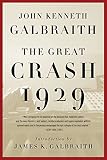
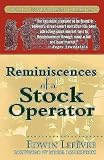
Recommended Reading
Key Statistics
First Stock Exchange
Amsterdam Stock Exchange 1602 — established to trade VOC shares
First Joint-Stock Company
Dutch East India Company (VOC) 1602 — raised 6.4 million guilders from public
London Stock Exchange
Founded 1801 — formalising trading that had occurred in coffee houses since 1698
New York Stock Exchange
Founded May 17 1792 — the Buttonwood Agreement under a buttonwood tree
Black Thursday
October 24 1929 — the opening day of the Wall Street Crash
Dow Jones Peak 1929
381 points on September 3 1929 — would not recover to this level until 1954