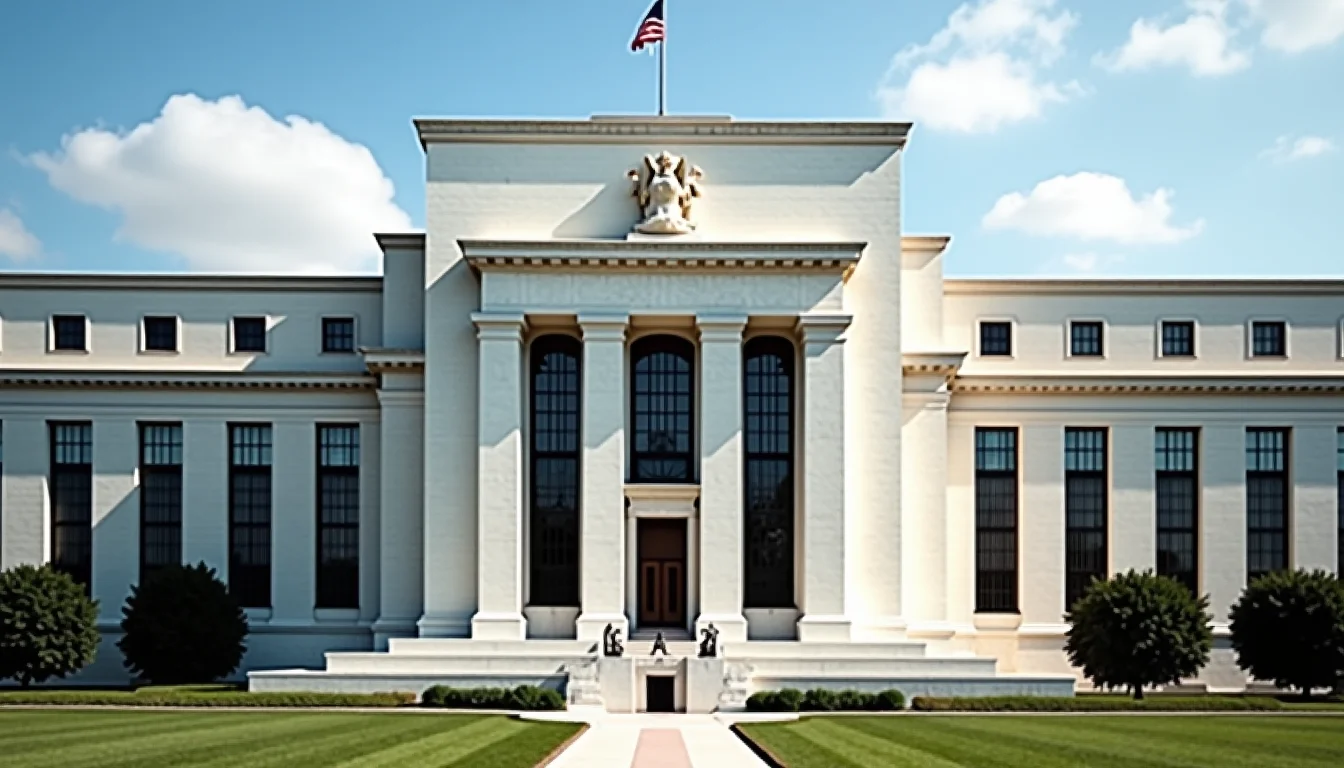
Kevin Warsh's narrow path to becoming Federal Reserve chair faces significant market headwinds as the Shiller CAPE ratio reaches 41.7, indicating extreme equity valuations that have historically preceded major corrections. According to the Financial Times, Warsh's potential nomination presents both opportunities and challenges as markets grapple with stretched valuations and persistent rate pressures.
Monetary Policy Crossroads
The current monetary environment presents a complex challenge for any incoming Fed chair. The 10-year Treasury yield at 4.55% trades significantly above the Fed funds rate of 3.63%, creating a 92 basis point spread that reflects market expectations for sustained higher rates. This yield curve configuration suggests investors anticipate either persistent inflation or economic growth that requires continued monetary tightening.
. US inflation at 2.6% remains above the Fed's 2% target, while the VIX at 18.33 indicates elevated market volatility concerns. The combination of these factors creates a policy environment where traditional monetary tools may face limitations.
Valuation Extreme Signals Caution
The Shiller CAPE ratio's current level of 41.7 represents one of the highest valuations in market history, exceeded only during the dot-com bubble peak and briefly in 2021. This metric, which compares current stock prices to average inflation-adjusted earnings over the past decade, suggests significant downside risk for equity markets. Global markets reflect this tension, with the S&P 500 declining 0.09% to 7399 despite modest gains in the Dow Jones at 50944.
The 4.55% US 10-year yield trading significantly above the 3.63% Fed funds rate signals market expectations for higher long-term rates, while the Shiller CAPE ratio at 41.7 indicates US equity valuations remain extremely stretched relative to historical earnings.
Regional market divergence adds complexity to the global picture. The Nikkei 225 surged 2.17% to 65417, while European markets showed mixed performance with the DAX gaining 0.35% to 24703. Australian markets declined 0.24% to 8604, reflecting broader uncertainty about monetary policy directions across major economies.
Currency and International Implications
Currency markets reflect the challenging international monetary environment facing any new Fed chair. The Australian dollar's weakness at 0.7050 against the USD demonstrates the impact of rate differentials, with the RBA's 4.35% cash rate failing to support the currency against higher US yields. This dynamic suggests continued pressure on risk currencies despite Australia's relatively contained inflation at 2.4%.
The EUR/USD at 1.1567 and GBP/USD at 1.3402 show modest strength against the dollar, yet these gains may prove temporary if US monetary policy remains restrictive. The USD/JPY at 160.20 reflects the extreme divergence between US and Japanese monetary policies, creating potential intervention risks that any Fed chair must consider in policy decisions.
Background: Central Bank Policy Tools
Understanding the Federal Reserve's policy framework becomes crucial as markets navigate extreme valuations and rate pressures. Quantitative easing represents one of the primary tools available to central banks for economic stimulus, involving the creation of money to purchase assets and lower interest rates. However, with current market conditions showing signs of asset price inflation, traditional easing mechanisms may face constraints.
The current environment differs from previous easing cycles, as asset valuations already reflect significant monetary accommodation. Any incoming Fed chair must balance market stability concerns against inflation risks, a particularly challenging task given the extreme CAPE valuation levels.
Market Structure Risks
The concentration of gains in specific market sectors creates additional challenges for monetary policy effectiveness. The NASDAQ 100's decline of 0.53% to 29258 reflects technology sector vulnerability to higher rates, while the Russell 2000's stronger performance at 2894 suggests some rotation toward value-oriented investments. This divergence indicates market structure changes that complicate traditional Fed policy transmission mechanisms.
Commodity markets add another layer of complexity, with WTI oil declining 3.88% to $87.76 and gold falling 0.9% to $4278. These moves suggest deflationary pressures in some sectors, yet natural gas gains of 0.99% to $3.18 and wheat advances of 1.03% to $589.25 indicate persistent inflation risks in essential commodities.
Forward Policy Considerations
The combination of extreme equity valuations, elevated bond yields, and mixed inflation signals creates a policy environment requiring careful calibration. Warsh's previous experience with unconventional monetary policy during the financial crisis provides relevant background, yet current conditions demand fresh approaches to managing asset price stability alongside traditional inflation targeting.
The 92 basis point spread between long-term yields and the Fed funds rate suggests markets expect either sustained policy tightening or structural changes in the neutral rate of interest. Any incoming Fed chair must address these expectations while managing the risks posed by historically extreme equity valuations that could amplify any policy misstep.