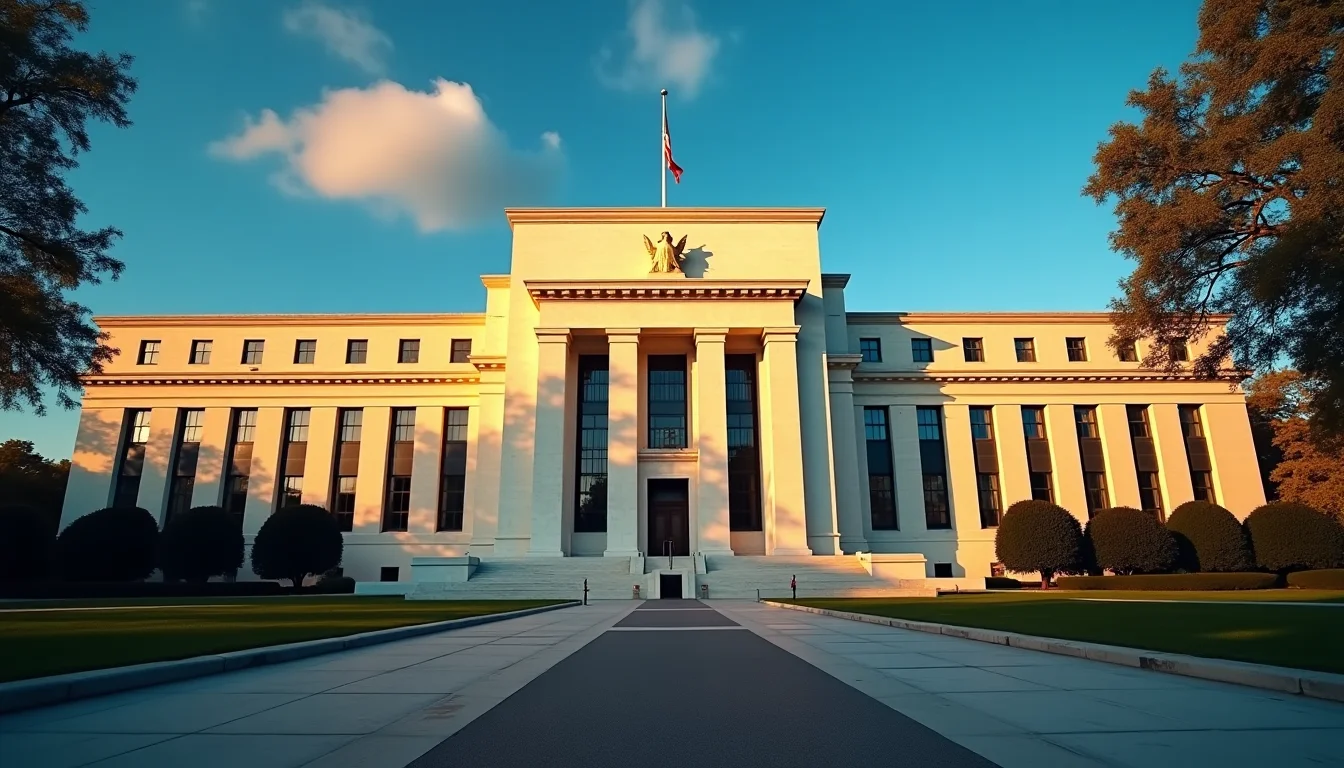
Federal Reserve Governor Kevin Warsh declined to signal an October rate move while speaking at International Monetary Fund meetings in Bangkok, according to the Financial Times The US dollar weakened against major currencies within hours of his remarks. US inflation holds at 2.6% against a Fed Funds Rate of 3.75%, leaving traders guessing about the central bank's next move.
Warsh's Silence Fuels Rate Uncertainty
Warsh's refusal to telegraph policy direction lands at an awkward moment. The New York Times frames the question bluntly: when will the Fed actually move? With US inflation running at 2.6%, more than a full percentage point below where it sat in prior tightening cycles, the case for a near-term cut exists. Yet Warsh chose vagueness over guidance, a stance that financial markets read as hawkish by default.
Separately, Warsh told the Bangkok audience he would maintain price stability even as artificial intelligence delivers what he described as a shock to the economy, according to the New York Times That framing matters. It suggests the Fed views AI-driven disruption, not just energy or wage pressure, as a genuine input into its inflation calculus. Equity markets registered mild unease: the Nasdaq 100 fell 0.75% while the broader S&P 500 was flat at 7744, a split that points to tech-specific repricing rather than a broad risk-off move.
Dollar Weakens, Yields Hold at Multi-Year Highs
The dollar's slide was immediate and measurable. The euro rose 0.32% against the greenback to 1.1257, sterling gained 0.65% to 1.3360, and the yen firmed slightly with USD/JPY down 0.09% to 157.82. These are modest single-session moves, but they confirm a market pricing in less Fed conviction, not more.
What makes this notable is that the move came without a corresponding drop in Treasury yields. The US 10-year sits at 5.21%, a level that keeps borrowing costs elevated for households, corporations and governments alike. The New York Times argues that bad news in the bond market is not uniformly bad news for investors, since rising yields driven by growth expectations differ fundamentally from yields rising on inflation fear.
A 10-year yield near 5.21% means something different depending on why it got there. Yields rising because growth is strong reward equity holders. Yields rising because inflation is sticky punish them.
The VIX fell 2.43% to 16.06, suggesting options markets are not yet pricing panic. That calm sits uneasily alongside a Shiller CAPE ratio of 41.01, a valuation level that leaves limited room for error if the inflation picture worsens.
Inflation's Real Economy Test
The real economy implications run deeper than one Fed governor's reticence. US inflation at 2.6% compares with Australian inflation of 2.4%, even though the RBA cash rate sits at 4.60%, above the US Fed Funds Rate of 3.75%. Central banks are no longer moving in lockstep, and that divergence is now showing up in currency and commodity markets simultaneously.
Bank of England Governor Andrew Bailey added a parallel data point, telling reporters it remains early days to see the full effect of energy prices on inflation, according to the Financial Times Three major central banks, the Fed, the RBA and the Bank of England, are each signalling that inflation's path remains unresolved. Investors responded by bidding up inflation hedges: gold rose 0.6% to $4,185, silver gained 1.37% to $57.94, and platinum jumped 2.07% to $1,655.
Digital assets moved in the same direction. Bitcoin rose 1.01% to $82,320 and Ethereum gained 3.75% to $2,474, a pattern worth watching given the growing correlation between crypto pricing and macro rate expectations, a dynamic tracked in detail at Coinhours' crypto-macro coverage When central banks go quiet, both metals and digital assets tend to catch the bid.
Background: Currency Policy and the AUD
Currency markets do not move in isolation from central bank credibility. The Australian dollar, a commodity-linked currency sensitive to rate differentials and export demand, sits at 0.6916 against the US dollar. Readers wanting a fuller grounding in how interest rate policy, commodity exports and capital flows shape a currency like the AUD can consult AUD Explained For historical context on how central banks arrived at today's inflation-targeting frameworks, see The History of Central Banking, Part 2.
The pattern now playing out, a Fed governor withholding guidance while yields stay elevated, has precedent. Central banks have repeatedly chosen ambiguity over commitment during periods of structural uncertainty, whether from oil shocks in the 1970s or technology-driven productivity shifts more recently. The AI shock Warsh referenced fits that historical mould: a real economy disruption whose inflationary consequences remain genuinely unclear even to the people setting policy.
What Comes Next
Markets now face a stretch without clear Fed signalling. The dollar's weakness, the elevated 10-year yield, and the rally in gold, silver and platinum all point toward investors hedging against policy ambiguity rather than betting on a specific outcome. Watch the next US inflation print closely. It will tell markets more about October's rate decision than anything Warsh said in Bangkok.