
ETF Investing Explained — The Complete Guide for Australian Investors
Learn how ETFs work, explore ASX-listed options, understand passive investing benefits, and discover how Australian investors can build diversified portfolios using exchange-traded funds in this comprehensive guide.
Key Takeaways
- →ETFs trade like stocks on ASX with real-time pricing, offering instant liquidity during market hours for Australian investors
- →Choose between broad market ETFs like VAS (ASX 200) or diversified options like VDHG for simple portfolio construction
- →Management fees typically range 0.04-0.75% annually, significantly lower than most actively managed Australian mutual funds
- →Consider currency hedged international ETFs to reduce foreign exchange risk when investing in overseas markets through ASX
- →ETFs provide automatic diversification across hundreds of stocks with minimum investment of just one share price
First ETF
SPDR S&P 500 ETF (SPY) launched January 1993 — now the world's largest ETF by assets
ASX ETFs
Over 300 ETFs listed on the ASX as of 2024, covering equities, bonds, property, and commodities
Management Fees
Index ETFs typically charge 0.03–0.20% p.a. vs 0.8–1.5% for active managed funds
Vanguard Australian Shares
VAS — tracks the ASX 300, one of Australia's most held ETFs
Tax Efficiency
ETFs are more tax-efficient than managed funds due to in-kind creation/redemption mechanism
Warren Buffett Endorsement
Buffett's will instructs 90% of his estate be invested in a low-cost S&P 500 index fund
What an ETF Is
An Exchange-Traded Fund (ETF) represents one of the most significant financial innovations of the modern era — a fund that trades on a stock exchange like an individual share whilst holding a basket of underlying assets. This structural elegance allows investors to buy or sell ETF units throughout trading hours at market prices, contrasting sharply with traditional managed funds that price once daily after market close.
The fundamental architecture of an ETF centres on its creation and redemption mechanism, operated by authorised participants — typically large institutional investors or market makers. These entities can create new ETF units by delivering a basket of the underlying securities to the ETF provider in exchange for new units, or redeem units by returning them for the underlying securities. This process, conducted "in-kind" rather than for cash, keeps the ETF's market price closely aligned with its net asset value (NAV) whilst providing remarkable tax efficiency.
The distinction between ETFs and traditional managed funds extends beyond trading mechanics. ETFs typically exhibit lower management fees — often 80-90% lower than actively managed funds — due to their predominantly passive investment approach. Where a traditional Australian equity managed fund might charge 1.2% annually, an equivalent broad-market ETF charges as little as 0.07%. This fee differential compounds dramatically over investment timeframes measured in decades.
ETFs fall into two primary categories: passive and active. Passive ETFs, representing the vast majority of the market, track an index such as the S&P/ASX 200 or the S&P 500. Active ETFs, a more recent development, employ fund managers making security selection decisions whilst maintaining the ETF structure's benefits. The passive approach has historically delivered superior outcomes for most investors, with index funds outperforming active strategies after fees over extended periods.
The History of ETFs
The ETF story begins with John Bogle's revolutionary decision in 1976 to launch the Vanguard First Index Investment Trust, the world's first index mutual fund tracking the S&P 500. Financial industry veterans derided Bogle's concept as "Bogle's Folly," arguing that investors deserved better than "average" returns. The fund attracted just $11 million in its initial public offering, falling well short of the planned $150 million target.
The leap from mutual fund to exchange-traded fund occurred on 22 January 1993, when State Street Global Advisors launched the SPDR S&P 500 ETF (SPY) on the American Stock Exchange. This first ETF carried the ticker symbol SPY — nicknamed "Spider" — and represented all 500 stocks in the S&P 500 index. Within months, SPY demonstrated the concept's viability, attracting both institutional and retail investors seeking intraday liquidity combined with diversified equity exposure.
"The tyranny of compounding costs" represents one of investing's most persistent wealth destroyers. Research consistently demonstrates that a seemingly modest 1% annual fee differential can reduce terminal wealth by 20-25% over a 30-year investment horizon, highlighting why fee minimisation should rank among every investor's primary objectives.
Australia's ETF market commenced in March 2001 with the ASX listing of the SPDR S&P/ASX 200 Fund (STW), tracking the performance of Australia's largest 200 companies. The local market developed gradually through the 2000s before accelerating dramatically following the 2008 financial crisis, as investors sought transparent, low-cost investment vehicles.
The global ETF industry's growth trajectory defies almost any historical parallel in financial markets. From that initial $1 billion in SPY assets in 1993, the worldwide ETF market has expanded to exceed $10 trillion in assets under management by 2024. This growth reflects not merely asset price appreciation but fundamental shifts in investor behaviour, institutional portfolio construction, and regulatory environments favouring transparent, low-cost investment products.
ETFs have fundamentally disrupted the active fund management industry. In the United States, passive investing now represents approximately 50% of total equity mutual fund and ETF assets, compared to less than 10% in 1995. This shift has forced active managers to justify their fees through consistent outperformance — a challenge few have successfully met over extended periods.
Types of ETFs Available to Investors
The Australian ETF marketplace offers over 300 funds across multiple asset classes, providing investors with unprecedented access to diversified global markets. Broad market index ETFs form the foundation of most portfolios, with the Vanguard Australian Shares Index ETF (VAS) tracking the ASX 300, Vanguard MSCI Index International Shares ETF (VGS) providing global developed market exposure, and iShares Core S&P 500 ETF (IVV) offering concentrated US market access. The BetaShares Australia 200 ETF (A200) represents a lower-cost alternative for ASX exposure at just 0.04% annually.
Sector-specific ETFs enable targeted exposure to particular industries or themes. The VanEck Australian Resources ETF (MVR) concentrates on mining companies, whilst the BetaShares Global Cybersecurity ETF (HACK) provides exposure to international cybersecurity companies. Technology exposure comes via multiple options including the BetaShares NASDAQ 100 ETF (NDQ) and the VanEck Video Gaming and eSports ETF (ESPO).
| Ticker | Underlying Index | Management Fee | 5-Year Return p.a. |
|---|---|---|---|
| VAS | ASX 300 | 0.10% | 6.8% |
| VGS | MSCI World ex-Australia | 0.18% | 9.2% |
| IVV | S&P 500 | 0.04% | 10.1% |
| A200 | ASX 200 | 0.04% | 6.9% |
| VAF | Australian Fixed Interest | 0.15% | 2.1% |
Fixed income ETFs provide bond exposure across duration and credit spectrums. The Vanguard Australian Fixed Interest Index ETF (VAF) offers broad Australian government and corporate bond exposure, whilst the iShares Core Composite Bond ETF (IAF) provides similar exposure at a slightly lower fee. International bond exposure comes via unhedged and hedged variants, with currency hedging removing foreign exchange risk for Australian dollar-based investors.
Property and commodity ETFs complete the asset class spectrum. The Vanguard Australian Property Securities Index ETF (VAP) provides exposure to Australian REITs, whilst gold exposure comes via the ETFS Physical Gold ETF (GOLD) and the BetaShares Gold Bullion ETF (QAU). Inverse and leveraged ETFs, whilst available, carry substantial risks for retail investors due to their daily rebalancing mechanisms and are generally unsuitable for long-term holding periods.
The Case for Index Investing
The mathematical case for index investing rests on decades of performance data demonstrating the persistent inability of active fund managers to beat market benchmarks after fees. Standard & Poor's SPIVA (S&P Indices Versus Active) reports consistently show that 80-90% of active fund managers underperform their benchmark indices over 15-year periods across most asset classes and geographic regions.
The fee differential between active and passive strategies creates a substantial performance hurdle that few active managers successfully overcome. Consider a $100,000 investment held for 30 years, assuming an 8% gross annual return. With a 0.10% annual fee (typical for broad index ETFs), the final balance reaches approximately $976,000. The same investment bearing a 1.0% annual fee (modest for active management) produces a final balance of roughly $760,000 — a difference exceeding $216,000 purely due to fee compounding.
Warren Buffett's famous 2007-2017 wager against hedge funds provided definitive proof of index investing's superiority. The S&P 500 index delivered 7.1% annualised returns over the decade, whilst a carefully selected fund-of-hedge-funds managed just 2.2% annually. The $1 million wager proceeds went to charity, but the lesson resonated globally among institutional and retail investors.
The persistence of active underperformance reflects several structural factors. Active managers face the zero-sum mathematics of security selection — for every winner, there must be a loser — combined with the certainty of higher costs. Trading costs, research expenses, and management fees create persistent drags on performance that index funds largely avoid through their buy-and-hold approach.
Index investing's psychological benefits often prove as valuable as the mathematical advantages. The passive approach eliminates the temptation to chase performance, time markets, or make emotional investment decisions during volatile periods. Academic research consistently demonstrates that investor behaviour — buying high during euphoric periods and selling low during panics — destroys more wealth than high fees, market timing, or poor security selection.
How to Buy ETFs in Australia
Investors access ETF markets through multiple online brokerage platforms, each offering different fee structures and features. CommSec, Australia's largest online broker by client numbers, provides comprehensive ASX ETF access with brokerage fees starting at $10 per trade for balances under $1,000. SelfWealth offers a flat $9.50 brokerage rate regardless of trade size, whilst newer entrants like Stake provide commission-free US ETF trading, though currency conversion costs apply.
Pearler has emerged as a popular platform specifically designed for long-term ETF investing, offering automated investing features and competitive brokerage rates. The platform's focus on dollar-cost averaging and automatic rebalancing appeals to investors building diversified ETF portfolios over extended timeframes.
Understanding order types proves essential for efficient ETF trading. Market orders execute immediately at prevailing prices but expose investors to bid-ask spreads, particularly problematic during volatile trading periods or for less liquid ETFs. Limit orders specify maximum purchase prices or minimum sale prices, providing price certainty at the cost of execution certainty. For larger trades or less liquid ETFs, limit orders generally provide superior execution quality.
ETF distributions occur quarterly or semi-annually, depending on the specific fund. Australian equity ETFs typically provide quarterly distributions that may include franking credits, enhancing after-tax returns for Investors. International ETFs distribute semi-annually, with distributions comprising dividends from underlying holdings converted to Australian dollars.
Distribution Reinvestment Plans (DRPs) allow automatic reinvestment of distributions into additional ETF units, often without brokerage costs. This feature proves particularly valuable for long-term investors seeking to compound returns through automatic reinvestment whilst avoiding the cash drag of holding distributions in low-yielding bank accounts. Use the WealthWatchPro investor tools to model your ETF portfolio →
Building an ETF Portfolio
The core-satellite approach provides a time-tested framework for ETF portfolio construction, allocating 70-80% to broad market index ETFs (the core) whilst dedicating 20-30% to thematic or sector-specific ETFs (satellites). This structure captures broad market returns whilst allowing for tactical tilts towards specific sectors, regions, or investment themes.
A growth-oriented portfolio for young investors might comprise 40% VAS (Australian equities), 50% VGS (international developed markets), and 10% VGE (emerging markets), providing global diversification whilst maintaining a home country bias. Conservative investors might prefer 30% VAS, 30% VGS, 30% VAF (Australian bonds), and 10% cash or term deposits, whilst balanced investors typically target 60% equities and 40% fixed income allocations.
International ETFs play a crucial role in reducing concentration risk inherent in the Australian market, which exhibits heavy weightings towards financials (approximately 28%) and materials (approximately 20%). The ASX's concentration in these two sectors creates vulnerability to specific industry cycles, making international diversification essential for portfolio resilience.
Currency hedging decisions for international ETF exposure involve trade-offs between volatility reduction and return potential. Hedged international ETFs eliminate currency risk but may sacrifice long-term returns if the Australian dollar weakens against foreign currencies. Most financial advisers recommend a blend of hedged and unhedged international exposure rather than an all-or-nothing approach.
Rebalancing disciplines ensure portfolio allocations remain aligned with long-term objectives despite market movements. Annual rebalancing typically provides optimal results, capturing reversion-to-mean tendencies whilst minimising transaction costs. More frequent rebalancing rarely improves returns whilst increasing costs and complexity.
Dollar-cost averaging — investing fixed amounts regularly regardless of market conditions — smooths entry prices and removes timing concerns from investment decisions. This approach proves particularly valuable during volatile market periods, as consistent investment purchases more units when prices fall and fewer units when prices rise, naturally improving average purchase costs over time.
Tax Considerations for Australian ETF Investors
Australian tax treatment of ETFs generally mirrors that of direct share ownership, with capital gains tax applying to ETF sales after accounting for the 50% discount available for assets held longer than 12 months. This CGT discount effectively halves the tax on long-term capital gains, making buy-and-hold strategies particularly attractive for investors in higher marginal tax brackets.
Australian equity ETFs provide franking credits attached to distributions, representing credits for company tax already paid on dividends. These credits can reduce personal tax liabilities or, for investors with tax rates below 30%, result in cash refunds from the Australian Taxation Office. This franking system makes Australian equity ETFs particularly attractive for self-managed superannuation funds and retirees with lower tax rates.
International ETF distributions create more complex tax situations, as foreign income may attract foreign tax credits whilst being subject to Australian tax rates. The foreign income tax offset system prevents double taxation but requires careful record keeping and may not fully offset foreign taxes paid, particularly for investors in lower Australian tax brackets.
ETFs demonstrate superior tax efficiency compared to managed funds due to their in-kind creation and redemption mechanism. When institutional investors redeem ETF units, they typically receive a basket of underlying securities rather than cash, allowing the ETF to dispose of low-basis holdings without triggering capital gains tax events that would affect remaining unitholders.
Record keeping requirements for ETF investors include retention of Annual Tax Statements provided by ETF issuers and AMIT (Attribution Managed Investment Trust) statements detailing the character of distributions. These documents provide essential information for annual tax returns and capital gains calculations upon ETF disposal.
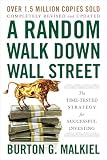
Further Reading: Investors seeking deeper insights into index investing principles should consider The Little Book of Common Sense Investing by John Bogle, which outlines the philosophical foundations of passive investing, and Burton Malkiel's A Random Walk Down Wall Street, providing comprehensive academic evidence supporting index-based investment strategies.
Frequently Asked Questions
What are ETFs and how do they work on the ASX?
ETFs (Exchange-Traded Funds) are investment funds that trade on the ASX like individual shares. They track an index, commodity, or basket of assets. When you buy ETF units through your broker, you own a portion of the underlying investments. Popular ASX ETFs include VAS (Australian shares) and VGS (global shares), offering instant diversification.
How are ETFs taxed in Australia and what do I report to the ATO?
ETFs generate taxable income through distributions (dividends/interest) and capital gains when sold. You'll receive annual tax statements showing Australian Tax Office (ATO) reporting details. Distributions are taxed as income, while capital gains qualify for 50% discount if held over 12 months. Include franking credits from Australian equity ETFs in your tax return.
What are the main risks of investing in ETFs in Australia?
Key ETF risks include market risk (underlying assets can fall), tracking error (performance may not perfectly match the index), and liquidity risk for smaller ETFs. Currency risk affects international ETFs, while some use derivatives creating counterparty risk. ASIC regulates ETFs, but investments aren't government guaranteed like bank deposits.
How can I build a diversified portfolio using ASX-listed ETFs?
Create diversification by combining Australian equity ETFs (like VAS, A200), international equity ETFs (VGS, VEU), bond ETFs (VAF, VGB), and potentially property/commodity ETFs. A common approach is 60% Australian shares, 30% international shares, 10% bonds. Regular investing through brokerage platforms enables dollar-cost averaging across multiple ETFs.
Recommended Reading
Key Statistics
First ETF
SPDR S&P 500 ETF (SPY) launched January 1993 — now the world's largest ETF by assets
ASX ETFs
Over 300 ETFs listed on the ASX as of 2024, covering equities, bonds, property, and commodities
Management Fees
Index ETFs typically charge 0.03–0.20% p.a. vs 0.8–1.5% for active managed funds
Vanguard Australian Shares
VAS — tracks the ASX 300, one of Australia's most held ETFs
Tax Efficiency
ETFs are more tax-efficient than managed funds due to in-kind creation/redemption mechanism
Warren Buffett Endorsement
Buffett's will instructs 90% of his estate be invested in a low-cost S&P 500 index fund