
Behavioural Finance — Part 1: Why Investors Make Irrational Decisions
Behavioural finance explores why investors make irrational decisions, rooted in Kahneman and Tversky's Prospect Theory and advanced by Nobel laureate Thaler, examining key biases like loss aversion, overconfidence, anchoring, and availability heuristics.
Key Takeaways
- →Loss aversion causes investors to hold losing stocks too long while selling winners early, reducing portfolio returns by 3-4% annually.
- →Overconfidence leads to excessive trading, with self-directed investors typically underperforming market indices by 1-2% per year from churning.
- →Anchoring bias makes investors fixate on purchase prices or recent highs, preventing rational sell decisions during market downturns.
- →Availability heuristic causes overweighting of recent events or media coverage when making investment decisions, creating portfolio imbalances.
- →Prospect Theory shows investors feel losses twice as intensely as equivalent gains, explaining why fear dominates market corrections.
Nobel Prize
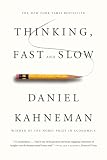
Daniel Kahneman won the 2002 Nobel Prize in Economics — a psychologist, not an economist
Loss Aversion
Losses feel approximately twice as painful as equivalent gains feel pleasurable — Kahneman & Tversky 1979
Disposition Effect
Investors hold losing stocks too long and sell winners too early — Shefrin & Statman 1985
Overconfidence
Studies show 74% of fund managers believe they are above-average — statistically impossible
Availability Bias
Investors overweight recent dramatic events — markets often oversold after crashes, overbought after booms
Anchoring
First price seen for an asset becomes a reference point that distorts all subsequent valuation judgements
For the better part of half a century, financial theory rested on a fundamental assumption: investors are rational actors who process information efficiently and make optimal decisions to maximise their wealth. This elegant mathematical framework, crystallised in Eugene Fama's Efficient Market Hypothesis of 1970, suggested that markets were nearly perfect information-processing machines where prices always reflected fair value. Yet by the 1980s, mounting evidence of market anomalies and investor irrationality began to crack this theoretical foundation.
The discipline of behavioural finance emerged from this intellectual crisis, drawing on insights from psychology to explain why real investors systematically deviate from the rational ideal. Rather than being coldly logical calculators, humans proved to be predictably irrational — prone to cognitive biases, emotional decision-making, and systematic errors that persist even when pointed out. This revolution reached its pinnacle when Daniel Kahneman, a psychologist, won the 2002 Nobel Prize in Economics for work that fundamentally changed how we understand financial decision-making.
The implications extend far beyond academic theory. Understanding these behavioural patterns helps explain market crashes, bubbles, and the persistent underperformance of retail investors. More practically, recognising our own cognitive limitations can improve investment outcomes and prevent costly mistakes driven by hardwired psychological tendencies.
The Birth of Behavioural Finance
The Efficient Market Hypothesis emerged from Eugene Fama's seminal 1970 paper, which argued that stock prices reflect all available information and follow a random walk. This theory dominated financial economics for two decades, underpinned by the assumption that investors are rational actors who maximise expected utility with unlimited computational power and perfect self-control.
Yet cracks in this elegant framework began appearing almost immediately. The January effect saw small-cap stocks consistently outperform in the first month of each year. The size premium meant smaller companies generated higher returns than their risk profiles suggested. Momentum patterns showed winning stocks continuing to outperform while losers kept falling — directly contradicting market efficiency.
Academic economists initially dismissed these anomalies as statistical flukes or compensation for unmeasured risks. But the patterns persisted across different time periods, markets, and asset classes. Something fundamental was missing from the rational investor model.
"The efficient market hypothesis is the most remarkable error in the history of economic theory. This is a theory that tells us that the market price is always right." — Behavioral economist Robert Shiller, reflecting on the pre-2008 consensus that housing prices accurately reflected fundamentals.
The breakthrough came from an unexpected source: psychology. In 1979, Daniel Kahneman and Amos Tversky published "Prospect Theory: An Analysis of Decision under Risk," which documented systematic deviations from rational choice theory. Their experiments revealed that people evaluate gains and losses differently, overweight small probabilities, and use mental shortcuts that produce predictable errors.
Richard Thaler bridged this psychological research with economics, coining the term "behavioural finance" and documenting how these cognitive biases affected real investment decisions. His work earned him the 2017 Nobel Prize in Economics, cementing behavioural finance as a legitimate field of study.
The shift from assuming rational investors to understanding predictably irrational ones opened new avenues for explaining market phenomena that traditional theory couldn't address. Asset bubbles, crashes, and persistent return patterns suddenly made sense through the lens of human psychology.
System 1 and System 2 Thinking
Kahneman's dual-process theory provides the foundation for understanding why investors make irrational decisions. The human mind operates through two distinct systems: System 1 thinking is fast, automatic, intuitive, and emotional, while System 2 is slow, deliberate, effortful, and analytical.
Most financial decisions default to System 1 processing. When stock prices plummet, the immediate emotional response is fear — triggering fight-or-flight reactions that evolved for physical survival, not portfolio management. System 1 sees patterns where none exist, extrapolates recent trends indefinitely, and makes quick judgements based on limited information.
System 2 thinking requires conscious effort and cognitive resources. It can perform complex calculations, consider multiple scenarios, and override emotional impulses. However, System 2 is lazy by design — it only engages when absolutely necessary because deliberate thinking is metabolically expensive.
This creates a fundamental problem for investors. Good investment decisions require System 2 analysis: evaluating company fundamentals, considering long-term probabilities, and resisting emotional reactions to market volatility. But the stress of losing money, time pressure of market movements, and complexity of financial information often overwhelm our analytical capacity.
"Tired investors make systematically worse decisions. Studies show that fund managers who worked longer hours, experienced sleep disruption, or faced cognitive overload from processing too much information generated lower returns. The quality of financial decision-making deteriorates measurably under cognitive stress."
Recognising which system is driving a decision becomes critical for investment success. Sudden urges to buy or sell, strong emotional reactions to market movements, and snap judgements about stock picks usually originate from System 1. Developing awareness of these automatic responses is the first step toward more rational investing.
Loss Aversion and Prospect Theory
Perhaps the most profound insight from behavioural finance is that losses feel approximately twice as painful as equivalent gains feel pleasurable. This asymmetry in how we perceive outcomes violates traditional utility theory, which assumes people evaluate changes in wealth objectively.
Prospect Theory reveals that humans don't evaluate absolute wealth levels but rather gains and losses relative to a reference point. The value function is S-shaped: concave in the domain of gains (diminishing marginal utility) and convex in the domain of losses (diminishing marginal disutility), with a steeper slope for losses than gains.
This psychological quirk explains why investors systematically hold losing stocks too long while selling winners too early — the disposition effect identified by Hersh Shefrin and Meir Statman in 1985. Investors become risk-seeking when facing losses, hoping for a recovery that will allow them to break even. Conversely, they become risk-averse after gains, preferring to lock in profits rather than risk giving them back.
Empirical evidence for the disposition effect is overwhelming. Studies across multiple countries and time periods show investors are 50% more likely to sell a winning stock than a losing one. This behaviour destroys returns because winners tend to continue outperforming while losers keep underperforming.
The disposition effect becomes particularly destructive during market crashes. Instead of recognising losses and rebalancing portfolios, investors hold onto declining positions hoping for recovery. Many retail investors abandoned equity markets entirely after the 2008 financial crisis, missing the subsequent decade-long bull market.
The Mathematics of Loss Aversion
If a stock falls 50%, it must gain 100% to return to break-even. But the psychological impact is asymmetric: the 50% loss feels twice as painful as a 25% gain feels good. This means investors need a gain of roughly 50% just to feel emotionally neutral about the investment — explaining why so many abandon stocks after major declines.
Overconfidence and Illusion of Control
Overconfidence may be the most expensive bias in investing. Surveys consistently show that 70-80% of investors believe they are above average — a statistical impossibility that would be humorous if it weren't so costly. This overconfidence manifests in several destructive ways.
The illusion of knowledge leads investors to believe that gathering more information will improve their forecasting ability. In reality, additional information beyond basic financial metrics rarely enhances prediction accuracy. Worse, it increases confidence in predictions without improving their quality.
The planning fallacy causes investors to underestimate the time, costs, and risks of their investment strategies while overestimating potential returns. This bias explains why most active traders lose money despite believing they can beat the market.
Gender differences in overconfidence produce measurable investment outcomes. Studies by Brad Barber and Terrance Odean found that men trade 45% more than women, generating lower returns as a result. Women's lower trading activity and greater willingness to seek advice translated into superior long-term performance.
The dollar cost of overconfidence is substantial. Excessive trading destroys returns through transaction costs, poor market timing, and tax inefficiency. Barber and Odean calculated that the most active individual investors underperformed the market by 6.5% annually after adjusting for risk and transaction costs.
Professional investors aren't immune to overconfidence. Mutual fund managers who trade more frequently generate lower returns for their investors. The belief that superior information or analytical skill can overcome market efficiency proves consistently wrong, yet the illusion of control keeps many professionals churning portfolios.
Anchoring and Framing
Anchoring bias demonstrates how the first piece of information we encounter disproportionately influences all subsequent judgements. In investing, this creates persistent valuation errors as purchase prices become psychological reference points that distort rational analysis.
Consider an investor who bought a stock at $100. Even if fundamental analysis suggests fair value is $60, the original purchase price serves as an anchor that makes the current price seem cheap. This anchoring effect persists even when investors consciously recognise the bias.
The 52-week high functions as a powerful anchor for many stocks. Shares trading near their annual high often seem expensive, while those near 52-week lows appear cheap — regardless of underlying business fundamentals. This mechanical thinking can lead to systematic errors in valuation.
Framing effects show how presenting identical information differently produces different decisions. A mutual fund with "90% success rate" sounds more attractive than one that "fails 10% of the time," despite describing the same outcome. Financial media exploits framing by presenting market moves as dramatic events rather than normal volatility.
Professional presentations use anchoring strategically. Investment banks typically start pitch presentations with optimistic price targets, anchoring clients' expectations at high levels. Earnings guidance uses similar techniques, with companies providing ranges that anchor analyst expectations.
Counter-Anchoring Techniques
To reduce anchoring bias: (1) Consider multiple valuation approaches before fixating on one number, (2) Explicitly ask "What if this stock were trading at 50% or 200% of current price?" (3) Use systematic screening criteria rather than starting with price-based observations, (4) Set position sizes before researching specific investments to avoid anchoring on arbitrary reference points.
Availability and Representativeness Bias
Availability bias causes investors to overweight recent, dramatic, or easily recalled events when making decisions. The 2008 financial crisis provides a perfect example: many investors avoided stocks for years afterward because the vivid memory of portfolio losses made market crashes seem more probable than they actually were.
This bias operates like the classic example of airplane crashes versus car accidents. Plane crashes receive extensive media coverage and create vivid mental images, making air travel seem more dangerous than it is. Car accidents are more common but less memorable, leading to systematic underestimation of driving risks.
Representativeness bias leads investors to judge probability by how closely something resembles a familiar pattern or prototype. A rapidly growing technology company might seem like the "next Apple" based on superficial similarities, ignoring the base rate of startup failure or fundamental differences between the businesses.
These biases work together to drive both momentum and reversals in markets. Availability makes recent good news seem more likely to continue, fueling momentum. But when patterns break and dramatic reversals occur, the new information becomes highly available, driving overcorrection in the opposite direction.
Financial media amplifies both biases by focusing on dramatic events and drawing parallels to historical patterns. Headlines like "Is This 1929 All Over Again?" trigger representativeness bias, while constant coverage of market volatility makes crashes seem more likely through availability bias.
For historical case studies of behavioural biases driving asset bubbles, see Bubblepedia →
The dot-com bubble perfectly illustrates how these biases created systematic mispricing. Recent success stories made internet stocks highly available in investors' minds. New IPOs were judged by their resemblance to previous winners rather than fundamental analysis. The combination drove valuations to levels that seemed rational at the time but proved disastrously wrong.
Understanding availability and representativeness bias helps explain why contrarian investing often works. When negative events dominate the news, availability bias makes bad outcomes seem more likely than they are. Patient investors who can resist these psychological pressures often find attractive opportunities in oversold assets.
The practical implications for portfolio management are significant. Regular rebalancing forces investors to sell assets that have performed well (and seem like good bets due to availability) while buying those that have performed poorly (and seem dangerous for the same reason). This systematic approach helps overcome natural psychological tendencies that destroy long-term returns.
Effective risk management requires accounting for these biases when setting position sizes and stop-losses. What feels like appropriate risk based on recent experience may be systematically biased by availability effects. Building in systematic safeguards helps prevent behavioural errors from destroying portfolios during periods of high stress.
For investors serious about improving their decision-making, understanding these foundational biases is just the beginning. Part 2 of our behavioural finance series explores advanced concepts including herd behaviour, mental accounting, and practical techniques for building bias-resistant investment processes.
Frequently Asked Questions
What is behavioural finance and how does it apply to Australian investors?
Behavioural finance studies why investors make irrational decisions based on psychological biases rather than purely financial logic. Developed from Kahneman and Tversky's Prospect Theory, it explains common Australian investor behaviours like panic selling during ASX downturns or holding losing mining stocks too long due to loss aversion, helping understand market inefficiencies.
How does loss aversion affect Australian share trading decisions?
Loss aversion means Australian investors feel losses twice as intensely as equivalent gains, leading to poor ASX trading decisions. Investors often hold losing positions hoping to break even while selling winners too early. This bias particularly impacts retail investors during market volatility, causing them to miss recovery opportunities and crystallise unnecessary losses.
What is overconfidence bias and how does it impact Australian portfolio performance?
Overconfidence bias causes Australian investors to overestimate their stock-picking abilities and market timing skills, leading to excessive trading on the ASX. Research shows overconfident investors typically underperform market indices by 1-3% annually due to frequent trading costs and poor security selection, particularly affecting self-directed SMSF trustees.
How can Australian investors overcome anchoring bias when making investment decisions?
Anchoring bias occurs when investors fixate on irrelevant reference points like purchase prices or 52-week highs. Australian investors can overcome this by focusing on fundamental analysis, using systematic rebalancing strategies, setting predetermined exit rules, and regularly reviewing portfolios with fresh perspectives rather than being anchored to past ASX performance levels.
Recommended Reading

Key Statistics
Nobel Prize
Daniel Kahneman won the 2002 Nobel Prize in Economics — a psychologist, not an economist
Loss Aversion
Losses feel approximately twice as painful as equivalent gains feel pleasurable — Kahneman & Tversky 1979
Disposition Effect
Investors hold losing stocks too long and sell winners too early — Shefrin & Statman 1985
Overconfidence
Studies show 74% of fund managers believe they are above-average — statistically impossible
Availability Bias
Investors overweight recent dramatic events — markets often oversold after crashes, overbought after booms
Anchoring
First price seen for an asset becomes a reference point that distorts all subsequent valuation judgements