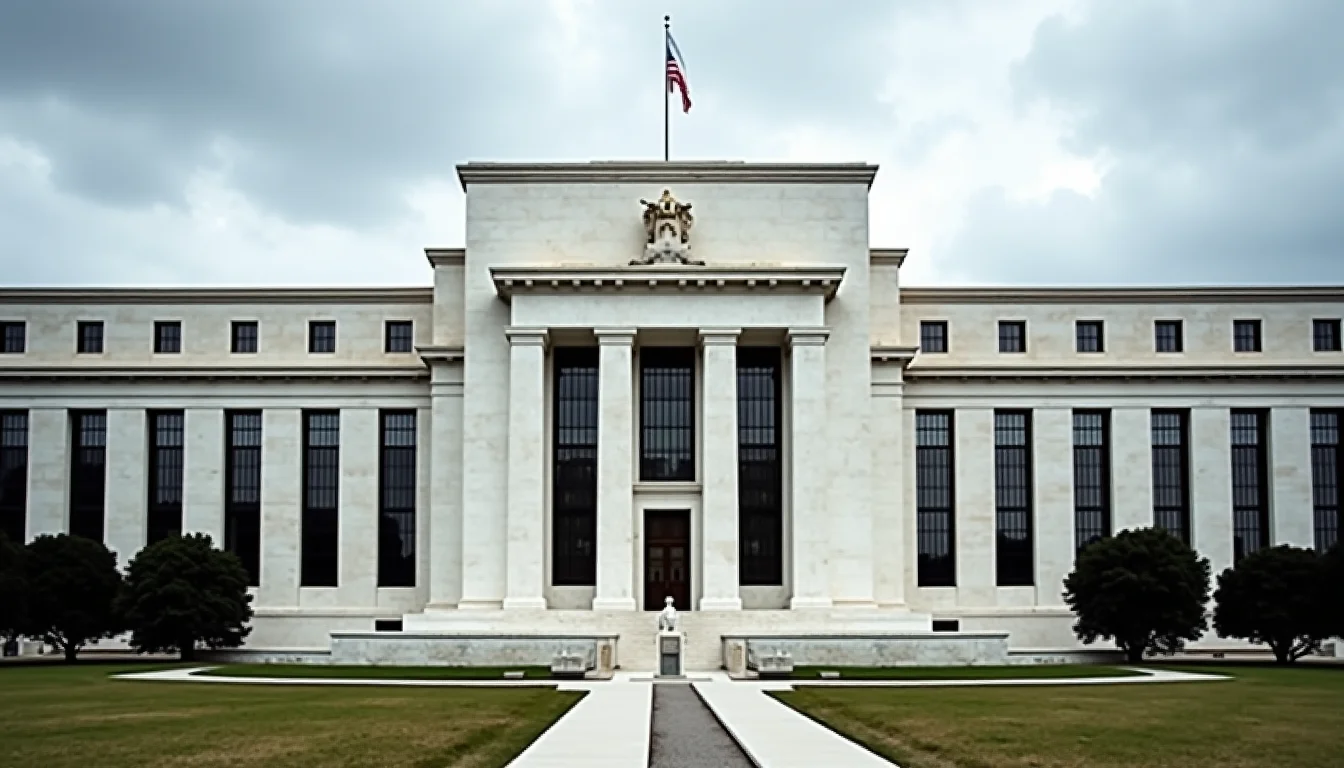
The US 10-year yield sits at 4.30% while the European Central Bank maintains rates at 2.00%, creating a significant differential that continues to attract global capital flows toward dollar-denominated assets. This widening gap has intensified following recent Justice Department investigations into Federal Reserve operations, raising questions about central bank independence that could reshape monetary policy frameworks across developed markets.
Justice Department Scrutiny Raises Independence Concerns
The Justice Department's decision to drop its criminal investigation into Fed Chair Jay Powell removes immediate political pressure but highlights ongoing tensions between fiscal and monetary authorities. This scrutiny comes as the Fed funds rate of 3.64% remains substantially below the 10-year yield, indicating market expectations for continued monetary tightening despite inflation progress to 2.6%.
Kevin Warsh's potential appointment to Treasury suggests a more interventionist approach to Federal Reserve policy coordination. His previous advocacy for reducing the Fed's market footprint could fundamentally alter quantitative easing practices that have underpinned asset valuations since 2008.
Currency Markets Reflect Policy Divergence
The EUR/USD pair trading at 1.1715, up 0.23%, demonstrates relative dollar strength driven by rate differentials and policy uncertainty. European markets showed weakness with the Euro Stoxx 50 declining 0.26% to 5879, while the DAX fell 0.11% to 24128, reflecting investor concerns about the sustainability of accommodative European monetary policy.
The expanding rate differential between major central banks creates structural pressures on global capital allocation, particularly when combined with political interference in monetary policy independence. Historical precedent from the 1970s demonstrates how such pressures can undermine anti-inflation credibility.
Asian Markets Signal Regional Divergence
Japan's Nikkei 225 gained 0.97% to 59716, bucking the global trend as the Bank of Japan maintains its ultra-low rate of 0.73%. This divergence reflects different inflation dynamics, with Japan still managing deflationary pressures while Western economies combat persistent price growth.
The USD/JPY pair at 159.43, down 0.15%, reflects this rate differential, though recent intervention threats from Japanese authorities have tempered further yen weakness. China's Shanghai Composite fell 0.64% to 4080, indicating continued domestic economic challenges despite policy support measures.
Implications for Global Risk Assets
The VIX declining 1.92% to 18.94 suggests complacency despite underlying structural tensions in monetary policy coordination. Bitcoin's modest gain of 0.09% to $77,971 indicates crypto markets remain sensitive to dollar strength and regulatory clarity.
With Australian inflation at 2.4% and the RBA cash rate at 3.85%, domestic policy makers face similar pressures to balance growth support with price stability. Portfolio managers should monitor how expanding rate differentials affect currency hedging costs and international equity allocations as central bank independence questions intensify globally.
Australian Investment Strategy Adjustments
Australian superannuation funds managing $3.5 trillion in assets face critical reallocation decisions as the US-Europe rate differential widens. The combination of US 10-year yields at 4.30% versus Australia's comparable government bond yields creates compelling opportunities for currency-hedged US exposure, particularly given the RBA's constrained policy space with inflation already at 2.4%. Super funds traditionally overweight domestic equities may need to reassess international allocations as yield differentials make offshore fixed income increasingly attractive on a risk-adjusted basis.
ASX-listed companies with significant offshore earnings exposure present tactical opportunities as the expanding rate differential supports continued USD strength. Resource exporters and multinational corporations stand to benefit from translation effects, while domestic-focused retailers and utilities face headwinds from potential capital outflows toward higher-yielding international alternatives. The franking credit system's tax efficiency becomes less compelling when weighed against 430 basis points of additional yield available in US markets.
Retail investors should reconsider the traditional home bias embedded in Australian portfolios, particularly given the limited domestic bond market depth compared to US treasuries. Currency hedging costs remain manageable given current swap rates, making hedged international exposure viable for conservative allocators seeking yield enhancement. The sustainability of Australia's dividend-focused equity culture faces testing as global investors increasingly prioritise absolute returns over tax-effective income streams.
Institutional managers must balance the immediate appeal of higher US yields against potential currency volatility and geopolitical risks surrounding Federal Reserve independence. The AUD's sensitivity to commodity prices provides some insulation, but sustained capital outflows could pressure the currency below fundamental support levels.