
What Is a Stock?
A stock represents partial ownership in a company. When you buy shares, you become a shareholder with voting rights and potential dividends and gains.
Key Takeaways
- →Buying stock makes you a partial company owner with voting rights and claims on profits and assets.
- →Australian shareholders receive franking credits on dividends, providing valuable tax benefits worth considering when investing.
- →Stock prices fluctuate daily based on company performance, market sentiment, and economic conditions affecting potential returns.
- →Diversify across multiple stocks and sectors to reduce risk rather than concentrating holdings in single companies.
- →Research company financials, dividend history, and growth prospects before purchasing shares through your broker account.
Average Annual Return
~10% historically (before inflation)
ASX Listed Companies
Over 2,200
Minimum Investment
As low as $500 for most brokers
CGT Discount
50% for assets held 12+ months
Franking Credits
Up to 30% tax offset on dividends
Key Exchange
Australian Securities Exchange (ASX)
What is What Is a Stock??
A stock represents a fractional ownership stake in a publicly traded company, granting shareholders specific rights and potential returns based on the company's performance. When an individual purchases shares of stock, they become a partial owner of that corporation, entitled to a proportional claim on its assets, earnings, and voting rights in corporate matters. Stocks are also commonly referred to as shares or equity securities, with these terms used interchangeably across global markets including the Australian Securities Exchange (ASX).
The fundamental concept underlying stock ownership centres on the principle of equity participation. Unlike bondholders who are creditors to a company, stockholders are owners who benefit directly from corporate success through capital appreciation and dividend distributions. This ownership structure creates an alignment of interests between management and shareholders, as both parties benefit when the company's value increases over time.
Stocks are typically categorised into two primary types: common stock and preference shares. Common stockholders possess voting rights and receive dividends after preference shareholders, whilst preference shareholders generally receive fixed dividends and have priority claims on assets during liquidation. The Australian market, like most developed economies, predominantly features common stock trading, with companies listed on the ASX representing diverse sectors from mining giants like BHP Group to technology companies such as Atlassian.
How Does What Is a Stock? Work?
The mechanics of stock ownership involve several interconnected processes that facilitate the transfer of ownership and the realisation of investment returns. When a company decides to raise capital through equity financing, it issues shares through an initial public offering (IPO) or subsequent offerings, creating a specific number of ownership units that represent the total equity of the enterprise. These shares are then traded on organised exchanges or over-the-counter markets, with prices determined by supply and demand dynamics influenced by company performance, market conditions, and investor sentiment.
Share prices fluctuate continuously during trading hours as buyers and sellers execute transactions based on their assessment of a company's intrinsic value and future prospects. The bid-ask spread represents the difference between the highest price buyers are willing to pay and the lowest price sellers are willing to accept, with market makers facilitating liquidity by providing continuous pricing. Investors can access both domestic stocks through the ASX and international securities through various broking platforms offering global market access.
Dividend distribution represents another crucial mechanism of stock ownership, with companies periodically sharing profits with shareholders. Australian companies often follow a franking credit system, where dividends carry tax credits that can reduce investors' overall tax liability. Capital gains realisation occurs when shareholders sell their holdings at prices higher than their purchase cost, with Australian tax law distinguishing between short-term and long-term capital gains for tax calculation purposes.
Stock splits and bonus issues represent corporate actions that affect the number of shares outstanding without changing the fundamental ownership percentage. These mechanisms allow companies to adjust share prices to maintain optimal trading ranges whilst preserving existing shareholders' proportional ownership interests.
Historical Context
The concept of stock ownership traces its origins to the Dutch East India Company in 1602, which issued the first freely tradeable shares to finance its maritime trading operations. This innovation allowed multiple investors to pool capital for large-scale commercial ventures whilst limiting individual risk exposure. The London Stock Exchange, established in 1801, became a model for organised securities trading that influenced the development of stock markets worldwide, including Australia's early trading activities.
Australia's stock market history began in the 1850s with informal trading in mining shares during the gold rush era. The Melbourne Stock Exchange, founded in 1884, became Australia's first formal securities market, followed by similar exchanges in Sydney and other major cities. These regional exchanges eventually consolidated into the Australian Stock Exchange in 1987, creating a unified national market that enhanced liquidity and operational efficiency.
The 20th century witnessed significant evolution in stock market infrastructure, with the introduction of electronic trading systems replacing traditional floor-based trading. The ASX adopted electronic trading in 1990, dramatically increasing transaction speed and reducing costs for investors. The CHESS (Clearing House Electronic Subregister System) settlement system, implemented in 1994, established efficient clearing and settlement processes that remain fundamental to Australian stock market operations.
The democratisation of stock ownership accelerated significantly following World War II, with government policies in Australia and other developed nations encouraging broader participation in equity markets through superannuation systems and tax incentives, transforming stocks from instruments primarily held by wealthy individuals to cornerstone investments for retirement planning across all socioeconomic classes.
Market deregulation during the 1980s and 1990s opened Australian markets to international competition, leading to increased foreign investment and the emergence of global investment strategies. The introduction of dividend imputation in 1987 created unique tax advantages for Australian dividend-paying stocks, influencing investment behaviour and capital allocation decisions for domestic investors.
Current Relevance for Investors
Contemporary Investors face a dynamic stock market environment characterised by increased global integration, technological advancement, and evolving regulatory frameworks. The ASX, currently ranked among the world's top ten exchanges by market capitalisation, provides access to over 2,200 listed entities spanning diverse sectors including resources, financial services, healthcare, and technology. This breadth offers Investors substantial domestic diversification opportunities whilst maintaining the benefits of franking credits and familiarity with local business conditions.
The superannuation system represents a critical factor in Australian stock market dynamics, with compulsory contributions channelling substantial capital into equity markets through managed funds and self-managed super funds (SMSFs). Approximately $3.5 trillion in superannuation assets significantly influences stock prices and company valuations, creating a substantial domestic institutional investor base that supports market liquidity and stability.
Technology has revolutionised stock accessibility for Australian retail investors, with online broking platforms offering commission rates below $10 per transaction and providing real-time market data, research tools, and portfolio management capabilities. The emergence of micro-investing platforms enables fractional share ownership, allowing investors to build diversified portfolios with minimal capital requirements. These technological advances have reduced barriers to entry and expanded stock market participation across demographic groups.
Environmental, social, and governance (ESG) considerations increasingly influence stock selection decisions among Investors, with sustainable investing principles becoming mainstream rather than niche investment approaches. The ASX has implemented enhanced ESG reporting requirements, whilst institutional investors increasingly integrate sustainability metrics into their investment processes, affecting capital flows and stock valuations across sectors.
Global market integration through exchange-traded funds (ETFs) and international broking access allows Investors to diversify beyond domestic markets whilst maintaining the convenience of ASX-listed securities. Currency hedging options and international investment vehicles provide sophisticated risk management tools previously available only to institutional investors.
Warning Signs & Common Mistakes
Several critical warning signs should alert investors to potential problems with individual stocks or their overall investment approach. Declining revenue trends over multiple quarters, particularly when accompanied by increasing debt levels, often signal fundamental business deterioration that may persist regardless of broader market conditions. Companies reporting consistent earnings through accounting adjustments rather than operational improvements frequently face eventual reckonings that result in significant stock price corrections.
Excessive concentration in individual stocks or sectors represents a common mistake among Investors, particularly given the ASX's heavy weighting toward financial services and mining companies. The 2008 financial crisis demonstrated the risks of overconcentration, with investors heavily weighted in bank stocks experiencing substantial losses when the sector faced systematic challenges. Diversification across sectors, market capitalisations, and geographic regions provides essential risk mitigation.
Emotional decision-making during market volatility leads to poor timing decisions that erode long-term returns. The tendency to sell stocks during market declines and purchase them during peaks contradicts successful investment principles and typically results in buying high and selling low. Historical analysis shows that missing just the best ten trading days in any given year can significantly reduce annual returns.
Inadequate due diligence represents another frequent error, with investors making purchase decisions based on tips, social media recommendations, or superficial analysis rather than comprehensive fundamental research. Understanding a company's business model, competitive position, management quality, and financial strength requires thorough investigation that many retail investors neglect in favour of quick decision-making.
Tax-loss harvesting mistakes, particularly relevant for Investors navigating capital gains tax obligations, can result in unnecessary tax liabilities or missed opportunities. The 30-day wash sale rule and the interaction between franking credits and capital losses require careful planning to optimise after-tax returns. Professional tax advice becomes essential for investors with substantial portfolios or complex circumstances.
Key Takeaways
Stock ownership represents a fundamental mechanism for wealth creation and portfolio diversification, offering Investors access to corporate earnings growth and inflation protection over long-term investment horizons. The combination of capital appreciation potential and dividend income, enhanced by Australia's franking credit system, creates compelling investment opportunities for domestic investors seeking to build wealth through equity participation.
Successful stock investing requires a disciplined approach that emphasises thorough research, appropriate diversification, and long-term perspective maintenance despite short-term market volatility. The Australian market's concentration in certain sectors necessitates careful attention to portfolio balance and consideration of international diversification to achieve optimal risk-adjusted returns.
Understanding the relationship between stock prices and underlying business fundamentals enables investors to make informed decisions based on intrinsic value rather than market sentiment or momentum. Companies with sustainable competitive advantages, strong management teams, and growing addressable markets tend to generate superior long-term returns regardless of short-term price fluctuations.
The integration of technology in stock trading and portfolio management provides Investors with unprecedented access to information, analysis tools, and global markets. However, this accessibility requires increased personal responsibility for investment decisions and risk management, as traditional intermediary oversight diminishes in self-directed investing environments.
Regular portfolio review and rebalancing ensure that stock allocations remain aligned with investment objectives and risk tolerance as personal circumstances and market conditions evolve. The dynamic nature of equity markets requires ongoing attention and periodic adjustments to maintain optimal portfolio construction and performance outcomes.
Frequently Asked Questions
What exactly is a stock and how does it work in Australia?
A stock represents partial ownership in a company listed on the Australian Securities Exchange (ASX). When you purchase shares, you become a shareholder entitled to voting rights, potential dividends, and capital gains. In Australia, stocks are regulated by ASIC and traded through licensed brokers on the ASX during market hours.
What are the main benefits of investing in Australian stocks?
Australian stocks offer potential capital growth, dividend income (often with franking credits), and voting rights in company decisions. Franking credits provide tax benefits as they represent company tax already paid, reducing your personal tax liability. The ASX also provides access to diverse sectors including mining, banking, and technology companies.
What are the key risks of buying stocks on the ASX?
Stock investments carry market risk where share prices can fluctuate significantly due to company performance, economic conditions, or market sentiment. You may lose some or all of your investment. Other risks include liquidity risk, company-specific risks, and sector concentration risk, particularly in Australia's resource-heavy market.
How are stock gains and dividends taxed in Australia?
Capital gains from stocks held over 12 months qualify for a 50% CGT discount for individuals. Dividends are taxed as ordinary income but may include franking credits that reduce your tax liability. The ATO requires you to report all dividend income and capital gains on your tax return, including franked and unfranked dividends.
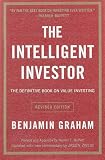
Recommended Reading

Key Statistics
Average Annual Return
~10% historically (before inflation)
ASX Listed Companies
Over 2,200
Minimum Investment
As low as $500 for most brokers
CGT Discount
50% for assets held 12+ months
Franking Credits
Up to 30% tax offset on dividends
Key Exchange
Australian Securities Exchange (ASX)